
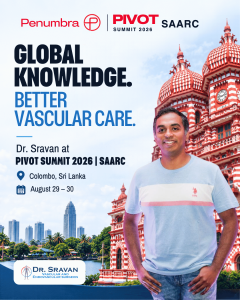
By Dr. Sravan C.P.S, Vascular & Endovascular Surgeon
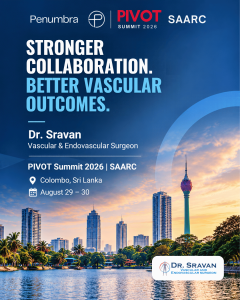
I participated in PIVOT Summit 2026, SAARC, in Colombo, Sri Lanka, on 29 and 30 August 2026. The meeting brought vascular specialists together to exchange clinical experiences and discuss evolving approaches to vascular care. The subjects included deep vein thrombosis, pulmonary embolism and acute limb ischemia.
These conditions affect different parts of the circulation and need different treatment decisions. The summit provided a setting for professional discussion, alongside consideration of emerging technologies. This update brings together the photographs shared on my Instagram profile and explains the clinical context behind the subjects featured in the carousel.
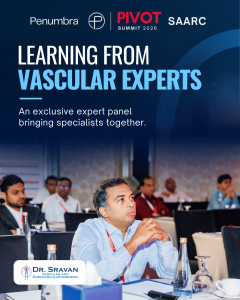
What was the focus of PIVOT Summit 2026?
The meeting focused on vascular knowledge exchange and discussion among specialists. The carousel describes an expert panel, clinical experience and practical challenges. It also shows moments of participation and discussion from Colombo.
Professional meetings allow doctors to examine how others approach difficult clinical questions. However, attendance at a conference does not mean that every technology discussed is appropriate for every patient. Evidence, suitability and safety remain central to treatment decisions.
Why were blood clots an important part of the discussion?
Blood clots can affect veins, the lung circulation or arteries supplying a limb. The site of the problem changes both the risks and the response. A patient with a swollen leg therefore needs a different assessment from someone with sudden loss of blood flow to a foot.
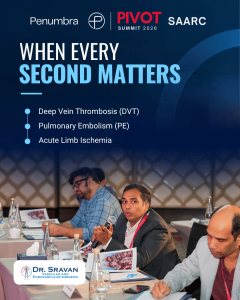
The carousel identifies three conditions:
- Deep vein thrombosis (DVT): a clot in a deep vein, often in a leg.
- Pulmonary embolism (PE): a clot blocking a blood vessel in the lungs, often after travelling from a deep vein.
- Acute limb ischemia: a sudden reduction in blood supply to an arm or leg.
These definitions are general patient information. They do not reproduce individual cases or unpublished advice from summit participants.
What should patients understand about DVT and pulmonary embolism?
DVT can cause pain and swelling in one leg, although symptoms vary. Pulmonary embolism can cause sudden breathlessness, chest pain or coughing up blood. Symptoms alone cannot confirm or exclude a clot.
A clinician assesses the history, examines the patient and selects appropriate investigations. Medicines that prevent clot growth are an important part of care for many patients. Procedures are considered for selected situations; they are not required for every clot.
The NHS patient guides to deep vein thrombosis and pulmonary embolism explain the conditions and warning symptoms.
How is acute limb ischemia different?
Acute limb ischemia concerns a sudden loss of arterial blood supply to a limb. It is not another name for DVT. A suddenly painful, pale or cold limb, especially with numbness or weakness, needs emergency assessment.
The Society for Vascular Surgery’s explanation of acute limb ischemia provides further patient information. Do not wait for a routine appointment if these symptoms develop.
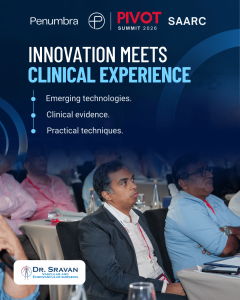
How does collaboration support vascular care?
Vascular care involves decisions about diagnosis, medicines, imaging and, when appropriate, intervention. Discussing clinical experiences helps specialists consider these decisions from different perspectives.
For patients, a useful question is why a particular option is being recommended. Ask what it is intended to achieve, what alternatives exist and what follow-up will be needed. The choice should reflect the clinical problem rather than the availability of a device.
My guide to vascular testing explains how assessment can help answer questions about circulation.
What do the five carousel images document?
The original sequence introduces the Colombo summit, shows learning with vascular experts, identifies the three clinical subjects, and records discussion of technology and clinical experience. The closing image brings the focus back to professional collaboration. These are records of the event, rather than claims about individual treatment results.
Where can you find the original summit post?
View the PIVOT Summit 2026 carousel on my Instagram profile for the original social update. The summit took place in August; the post was shared afterwards.
For non-emergency concerns, you can read about my vascular and endovascular practice or request a consultation in Bangalore. New one-sided swelling needs urgent assessment. Sudden breathlessness, chest pain, fainting or a cold, weak limb requires emergency care.
Questions about the PIVOT Summit update
When and where was the summit?
PIVOT Summit 2026, SAARC, took place in Colombo, Sri Lanka, on 29 and 30 August 2026.
Did I attend as a speaker?
The source post records my participation. This article does not claim an invited speaking or faculty role.
Are DVT and acute limb ischemia the same?
No. DVT affects a deep vein. Acute limb ischemia involves a sudden reduction in arterial blood supply to a limb.
Does every blood clot need a procedure?
No. Treatment depends on the site, severity and individual risks. A clinical team decides whether medicines or an intervention are appropriate.
Is this the PEN Academy discussion?
No. This article documents the Colombo summit. The PEN Academy discussion is a separate professional activity.
