
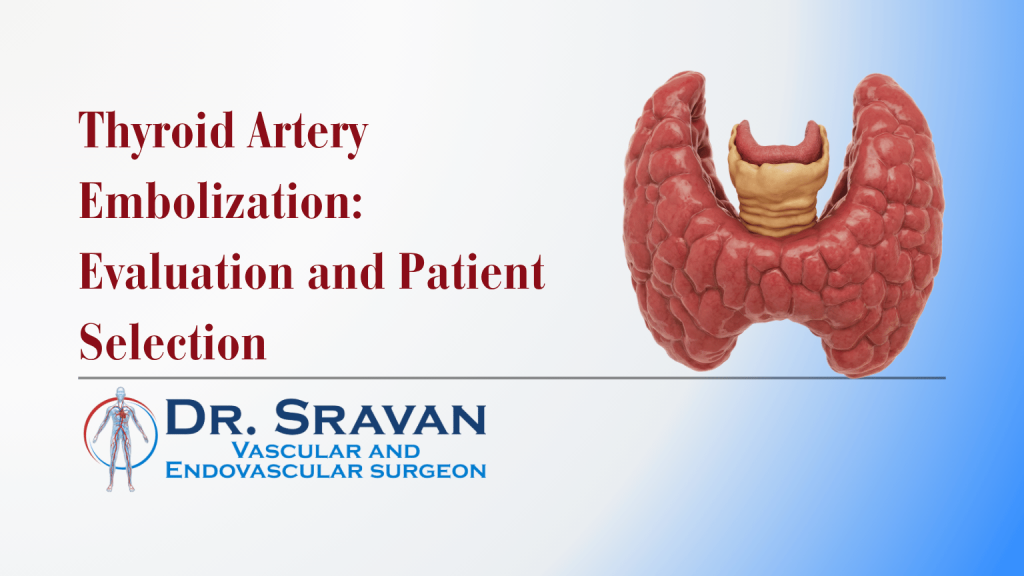
Thyroid artery embolization patient selection needs care. Thyroid artery embolization, or TAE, is an emerging procedure that reduces blood flow to selected thyroid tissue. It may warrant discussion in carefully selected circumstances, but I would not recommend it routinely for every thyroid nodule or enlarged gland. First, I need to understand the diagnosis, hormone function, symptoms and why established treatment options may not suit you.
In thyroid artery embolization patient selection, a benign-looking swelling does not by itself establish suitability. Assessment may involve ultrasound, thyroid blood tests, biopsy when indicated and a discussion with an endocrinologist or thyroid surgeon. My priority is to identify an appropriate treatment, rather than start with a preference for embolization.
What Does TAE Aim to Do?
TAE uses a catheter inside the blood vessels to reach selected arteries supplying the thyroid. Embolic material reduces blood flow to the targeted tissue, with the aim of reducing its volume or activity.
It differs from thyroid surgery, radioiodine treatment and needle-based thermal ablation. These approaches work differently and have different evidence, indications and risks.
If you want an overview of the technique, read the Thyroid Artery Embolization treatment page. Here, I focus on the questions that need answering before considering it.
An enlarged thyroid can have several causes. A procedure that targets blood supply will not automatically address every cause of swelling, pressure or abnormal thyroid hormone levels.
What Is the First Question in Thyroid Artery Embolization Patient Selection?
I start with the diagnosis. Is this a single benign nodule, a multinodular goitre, a hormone-producing nodule or another thyroid condition?
A goitre simply means that the thyroid is enlarged. It does not tell us whether the gland makes too much hormone, too little hormone or a normal amount.
Similarly, a nodule means a distinct lump within the thyroid. Most nodules are benign, but some require further investigation.
I also ask whether the symptoms genuinely come from the thyroid. A swallowing problem, a voice change or neck discomfort may need evaluation beyond a thyroid ultrasound.
Before discussing treatment, I want the patient and the clinical team to be clear about what they are treating.
Which Symptoms Need Assessment?
Arrange a thyroid assessment if you notice:
- A neck swelling that persists or increases.
- Pressure, discomfort or difficulty swallowing.
- A persistent voice change.
- Symptoms suggesting abnormal thyroid function.
- A thyroid nodule that has changed on examination or imaging.
These symptoms do not prove that embolization is needed. They establish a reason to clarify the diagnosis.
I would not advise waiting for a routine procedure appointment if you develop breathing difficulty or rapidly increasing neck swelling. Seek urgent medical assessment. Sudden or severe symptoms need their own evaluation, regardless of an existing thyroid diagnosis.
Bring earlier reports if available. Comparing examinations and images can help establish whether a swelling has genuinely changed.
What Does Thyroid Ultrasound Tell Us?
Ultrasound helps assess nodule size, composition and other features that guide the next investigation. It can also identify additional nodules and relevant lymph-node findings.
A report may describe a nodule as solid, cystic or mixed. It may also assign a risk category. These descriptions help doctors decide whether observation, biopsy or another assessment is appropriate.
Blood flow on ultrasound is only one feature. I would not use the word vascular or hypervascular as a stand-alone reason to embolize a nodule.
Nor does a risk category mean that treatment should happen before diagnosis. If a finding needs biopsy or thyroid-surgical review, that comes first.
Ask your doctor to explain the conclusion of the report and the recommended next step, rather than interpreting individual words in isolation.
When Is a Needle Biopsy Needed?
A fine needle aspiration biopsy samples cells from a nodule. Doctors decide whether to recommend it using ultrasound features, size, history and other clinical findings.
Not every nodule needs biopsy. However, when considering treatment directed at a presumed benign nodule, the team needs adequate confidence in that diagnosis.
A previous benign result may need review if the imaging and clinical picture do not match it. An inconclusive or indeterminate result also needs a defined diagnostic plan.
I would not use embolization to avoid investigating a suspicious nodule. It does not replace the diagnostic pathway for possible thyroid cancer.
Bring the full biopsy report rather than a verbal summary. The exact category and any follow-up recommendation can affect the treatment discussion.
Why Do Thyroid Blood Tests Matter?
Blood tests help establish how the thyroid is functioning. Assessment commonly starts with thyroid-stimulating hormone, or TSH, and may include other hormone tests according to the result and symptoms.
If the thyroid is overactive, the endocrinologist may recommend additional investigations to identify the cause. For example, a functioning nodule requires a different discussion from a non-functioning benign nodule.
Normal blood tests do not establish that every nodule is harmless. They describe hormone function, while ultrasound and biopsy address different questions.
Tell the team about thyroid medicines and any changes in your symptoms. Do not stop an antithyroid medicine or thyroid hormone replacement because you are considering an intervention.
The diagnosis, function and structure need to fit together before a treatment recommendation makes sense.
When Might TAE Enter the Discussion?
Published experience includes selected patients with enlarged benign thyroid tissue or other complex thyroid disease. However, the evidence remains limited compared with established treatments.
A recent systematic review advised against routine use and placed TAE in exceptional situations when standard treatment has failed or is unsuitable. That distinction matters when counselling patients.
I would therefore want clear answers to three questions:
- What problem are we trying to improve?
- Why are established treatments unsuitable or insufficient?
- What makes the likely benefit justify the procedural risks in this case?
Declining surgery is a reason to discuss alternatives carefully. It does not automatically make TAE appropriate.
Any consideration of TAE needs appropriate specialist expertise, a clear consent discussion and a follow-up plan. A consultation may reasonably conclude that another treatment is safer or more suitable.
How Does TAE Differ From Thyroid RFA?
Radiofrequency ablation, or RFA, places a needle-like probe into a selected nodule under ultrasound guidance and uses heat to treat tissue. TAE reaches the thyroid through the arterial circulation and reduces its blood supply.
They are not interchangeable techniques.
The decision can depend on whether there is a single dominant nodule or a more extensive gland problem, the diagnosis, symptoms, anatomy and available expertise. Their evidence bases also differ.
I would not describe TAE as an upgraded form of RFA or assume that treating an artery must be better than treating a nodule directly.
For a patient with a symptomatic benign nodule, discussion of established image-guided ablation may be relevant. The endocrine and procedural teams should explain which options apply to that particular nodule.
Which Other Treatments Deserve Consideration?
Observation
A benign nodule without troublesome symptoms may need monitoring rather than an intervention. The follow-up plan depends on its features and clinical context.
Medicines
Thyroid medicines can treat certain hormone disorders. They do not all shrink nodules, and the purpose of each prescription should be clear.
Radioiodine
Radioiodine is an established treatment for selected overactive thyroid conditions. Suitability depends on the diagnosis and individual circumstances.
Surgery
Thyroid surgery may be appropriate for suspected malignancy, significant compression, selected large goitres or other indications. The extent of surgery and expected follow-up vary.
Local ablation
Thermal or other image-guided ablation can be appropriate for selected benign nodules after proper evaluation.
I want you to understand why one option fits your situation better than another. The least invasive-looking procedure is not automatically the best choice.
What Risks Should We Discuss Before TAE?
The discussion should include arterial puncture complications, bleeding, contrast reactions, changes in thyroid function and unintended embolization outside the target.
The thyroid arteries have important connections to nearby circulation. Non-target embolization can cause serious injury; specialist planning aims to reduce that risk, but cannot eliminate it.
I would also discuss the possibility of pain, incomplete benefit and further treatment. We should agree what will happen if symptoms or hormone problems continue.
I do not quote a personal success percentage or promise that TAE avoids all future thyroid treatment. Small published series cannot reliably predict every patient’s outcome.
My explanation of non-target embolization describes why identifying and protecting nearby vessels matters.
What Happens After Thyroid Artery Embolization Patient Selection?
The next step may be observation, more diagnostic testing, an endocrinology review, a surgical opinion or a procedural discussion.
If the team considers TAE appropriate, you should receive an explanation of the proposed target, alternatives, important risks, medication plan and follow-up requirements.
Monitoring may involve symptom assessment, thyroid blood tests and imaging. The team needs to check function as well as size.
Recovery and thyroid changes do not happen on one fixed timetable. My TAE recovery guide addresses the recovery questions separately.
Ask who will manage your thyroid medicines afterwards. Do not assume that a vascular procedure ends the need for endocrine follow-up.
What Should You Bring to the Consultation?
Bring:
- Ultrasound reports and images.
- Thyroid function results.
- Biopsy results, if performed.
- Previous thyroid scans or operation records.
- Your medication and allergy list.
- Details of the symptoms you want treatment to improve.
Tell me if you have kidney disease, a previous contrast reaction or a possibility of pregnancy. These can affect investigation and procedural planning.
I would also ask what advice you have already received and why you are seeking another option. That helps identify the actual decision we need to make.
You can read my vascular and endovascular background before your visit.
If you are considering thyroid embolization in Bangalore, arrange an assessment with your reports. The purpose is to assess the diagnosis and treatment choices, not to presume that you need TAE.
The American Thyroid Association’s patient guide to thyroid nodules explains the standard evaluation with ultrasound, blood tests and biopsy that should come before any procedure is discussed.
Frequently Asked Questions
Is every benign thyroid nodule suitable for TAE?
No. Many benign nodules need observation only. When symptoms warrant treatment, established alternatives and the limited evidence for TAE need careful consideration.
Does normal TSH mean that my nodule is harmless?
No. TSH assesses thyroid function. Ultrasound and, when indicated, biopsy provide different information about the nodule and guide further assessment.
Can TAE replace a thyroid biopsy?
No. If a biopsy is indicated, embolization should not replace it. Suspicious or uncertain findings need a diagnostic plan before treatment selection.
Is TAE the same as radiofrequency ablation?
No. RFA applies heat within a nodule through a probe. TAE reduces blood supply through a catheter in the arteries. The methods, risks and indications differ.
Does TAE guarantee that I will avoid surgery?
No. Some patients may need another treatment because of diagnosis, anatomy, persistent symptoms or complications. I would discuss that possibility before considering embolization.
Can I stop thyroid medicines after embolization?
Only the prescribing team should change them. Follow-up blood tests and clinical assessment determine whether adjustment is appropriate.
Should I delay assessment of a voice change while deciding about TAE?
No. A persistent voice change or progressive neck symptoms need evaluation. Breathing difficulty or rapidly increasing swelling requires urgent medical attention.
