Skip to content
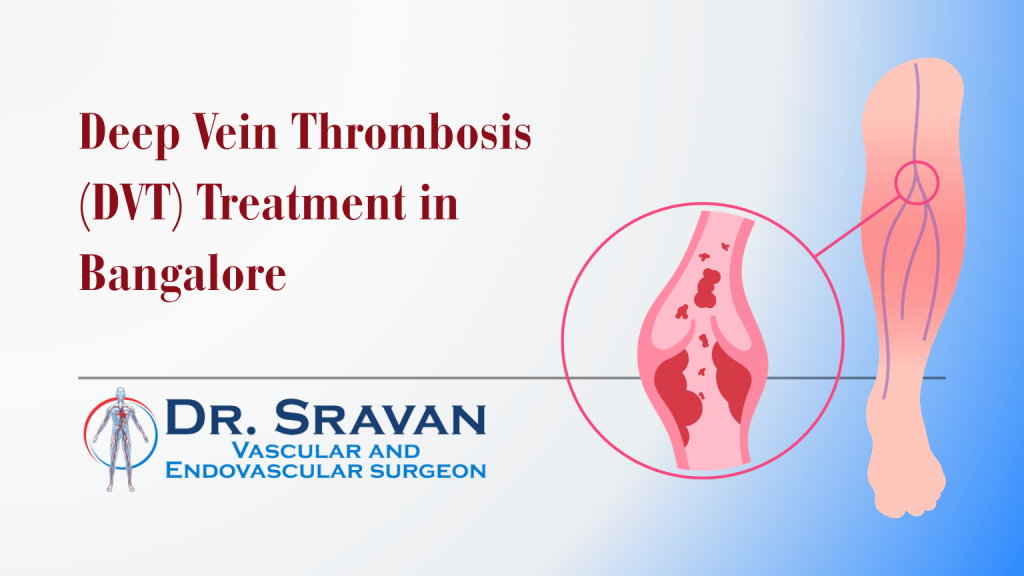
If one leg has suddenly become swollen, painful or unusually warm, or a Doppler scan has already shown a blood clot, the important next step is to understand where the clot is, how extensive it is and what treatment is actually required.
Most patients with deep vein thrombosis, or DVT, are treated with anticoagulant medicines, commonly called blood thinners. Not every DVT needs an operation or clot-removal procedure.
What matters is identifying patients who can be treated safely with medicines and those with extensive clotting, severe symptoms or particular anatomical problems who may need a more specialised vascular assessment.
What Is Deep Vein Thrombosis?
Deep vein thrombosis means a blood clot has formed inside one of the deep veins.
It most commonly affects the veins of the calf, thigh or pelvis.
The clot can partially or completely obstruct blood flow through the vein. This can cause swelling, pain, heaviness and warmth in the affected leg.
The reason we take DVT seriously is not only because of what happens in the leg.
Part of the clot can sometimes travel through the bloodstream and reach the lungs. This is called a pulmonary embolism, or PE.
DVT and pulmonary embolism together are known as venous thromboembolism.
What Does DVT Usually Feel Like?
One of the common questions I hear is:
“Doctor, my leg is swollen. How do I know whether it is DVT?”
The answer is that we cannot confirm DVT from symptoms alone.
A patient may have:
- swelling in one leg
- calf or thigh pain
- tenderness
- heaviness or tightness
- warmth
- redness or a change in skin colour
- veins that appear more prominent than usual
But many other conditions can also produce swelling and pain.
A muscle injury, infection, ruptured Baker’s cyst, venous insufficiency, lymphatic swelling and several other conditions can sometimes look similar.
That is why I prefer not to label every swollen leg as DVT without proper assessment.
When Should You Suspect DVT?
DVT becomes more important to consider when new leg symptoms occur together with risk factors such as:
- recent surgery
- hospital admission
- prolonged bed rest
- long periods of reduced mobility
- a previous DVT or pulmonary embolism
- active cancer
- major injury
- pregnancy or the period after delivery
- certain hormone-containing medicines
- an underlying tendency for the blood to clot
- prolonged immobility during travel in someone with other risk factors
Sometimes, however, a patient develops DVT without an obvious trigger.
Finding a clot is therefore only the first part of the assessment.
I also want to understand why it may have happened, because this can affect how long treatment is needed and what follow-up is appropriate.
DVT Symptoms That Need Urgent Medical Attention
A suspected DVT should be evaluated promptly.
Certain symptoms need emergency assessment, especially:
- sudden breathlessness
- unexplained chest pain
- coughing blood
- fainting or collapse
- severe breathing difficulty
These can be symptoms of pulmonary embolism.
Do not wait for a routine vascular appointment if these symptoms are present.
There is another uncommon but serious situation where the leg itself becomes severely swollen, painful and markedly discoloured because venous drainage is critically obstructed.
A rapidly worsening, severely swollen or blue-coloured leg also needs urgent hospital evaluation.
How I Evaluate a Patient With Suspected DVT
When someone comes with leg swelling, I do not look only at the swollen area.
I first try to answer a few basic questions.
When did it start?
Is one leg affected or both?
Was there recent surgery, hospitalisation, travel or immobility?
Has the patient had a clot before?
Are there symptoms that could suggest pulmonary embolism?
I also examine the leg and consider other possible causes of swelling.
Clinical assessment helps us estimate the likelihood of DVT, but imaging is usually required to confirm the diagnosis.
Venous Doppler Ultrasound for DVT
For most patients with suspected leg DVT, ultrasound is the key imaging test.
The scan allows us to assess the deep veins and look for evidence of thrombosis.
This is important because the location and extent of the clot influence the treatment discussion.
A clot limited to the calf is not necessarily approached in exactly the same way as an extensive clot involving the thigh and pelvic veins.
If you would like a broader explanation of vascular ultrasound, you can also read Dr Sravan’s guide on Doppler ultrasound for vascular diagnosis.
Is a D-Dimer Test Enough to Diagnose DVT?
No.
A D-dimer blood test can be useful as part of the diagnostic pathway, particularly when the clinical probability of DVT is low.
But a positive D-dimer does not automatically mean that a patient has DVT.
D-dimer levels can be raised for several reasons.
Similarly, the correct diagnostic pathway depends on the patient’s clinical probability, symptoms and circumstances.
For this reason, D-dimer should not be interpreted in isolation from clinical assessment and imaging.
Do All DVT Patients Need Hospital Admission?
Not necessarily.
Some patients with DVT can be treated without prolonged hospital admission when they are clinically stable and an appropriate treatment and follow-up plan is in place.
Other patients require hospital care because of factors such as:
- extensive thrombosis
- severe symptoms
- concern about pulmonary embolism
- significant bleeding risk
- other serious medical conditions
- a possible need for an intervention
- difficulty safely managing anticoagulation outside hospital
This decision has to be individual.
The word “DVT” on a scan report does not by itself tell us whether admission or a procedure is required.
Blood Thinners Are the Main Treatment for Most DVTs
For most patients with confirmed DVT, anticoagulation is the main treatment.
These medicines are commonly called blood thinners, although they do not literally make the blood thin.
Their main role is to reduce the ability of the blood to form further clots. This helps prevent the existing clot from extending and reduces the risk of additional clot formation while the body’s natural processes gradually deal with the clot.
This is also why I explain to patients that a blood thinner does not make the clot disappear immediately.
The leg may therefore remain swollen or uncomfortable for some time even after the correct treatment has started.
You can read the detailed patient guide on blood thinners for DVT for a deeper explanation.
Which Blood Thinner Is Used for DVT?
There are several anticoagulant medicines used for DVT.
The right choice depends on the individual patient.
Factors I would consider include:
- kidney function
- liver function
- bleeding risk
- other medicines
- active cancer
- body weight
- previous clotting history
- other medical conditions
- pregnancy where relevant
- whether an intervention is planned
This is why one patient’s prescription should never be copied by another patient simply because both have been told they have DVT.
Do not start, stop or change the dose of an anticoagulant without speaking to the treating doctor.
How Long Are Blood Thinners Needed After DVT?
This is another question almost every patient asks.
“Doctor, do I have to take this medicine for life?”
Not necessarily.
For confirmed proximal DVT, anticoagulation is commonly required for at least an initial treatment period. After this, the decision to continue or stop depends on why the clot occurred and the balance between the risk of another clot and the risk of bleeding.
For example, the discussion may be different for a patient whose DVT followed a temporary major risk factor compared with someone who develops an unprovoked DVT or has an ongoing risk factor.
So rather than giving every patient the same duration, I prefer to review:
Why did this DVT occur?
Is that risk factor still present?
Has the patient had DVT before?
What is the bleeding risk?
Is there another reason to continue anticoagulation?
The treatment duration should come from that assessment.
Does DVT Need Surgery?
Usually, no.
Most DVT patients do not need open surgery or an invasive clot-removal procedure.
This is an important point because patients sometimes see a large clot described on a Doppler report and assume it must be physically removed.
That is not how treatment is decided.
For many patients, anticoagulation remains the appropriate treatment even when the scan confirms a significant clot.
You can read more about how these decisions differ in the detailed guide on blood thinners versus procedures for DVT.
When May a Clot-Removal Procedure Be Considered?
Interventional treatment may be considered in selected patients.
One group that requires particular attention is acute iliofemoral DVT, where thrombosis involves the major veins higher in the thigh or pelvis.
If the clot is extensive, symptoms are severe and the patient is otherwise suitable for intervention, treatment options may include catheter-based techniques intended to reduce or remove the clot burden.
These decisions are selective.
I look at factors such as:
- where the clot is located
- how recently symptoms started
- severity of swelling and pain
- whether the limb is threatened
- patient’s functional status
- bleeding risk
- age and overall health
- underlying venous anatomy
A procedure should not be presented as the “advanced” option that every patient ought to receive.
For the majority of patients, the safer and more appropriate route may still be anticoagulation alone.
What Are Catheter-Directed Thrombolysis and Mechanical Thrombectomy?
These are different techniques that may be used in selected cases of extensive DVT.
Catheter-directed thrombolysis
A catheter is positioned close to or within the clot so that clot-dissolving medication can be delivered in a targeted manner.
Because thrombolytic medicines can cause significant bleeding, the treatment is not suitable for everyone.
Mechanical thrombectomy
Mechanical thrombectomy uses catheter-based equipment to remove or reduce clot burden.
Again, the presence of a clot does not automatically mean thrombectomy is necessary.
The procedure needs a clear clinical reason.
The important question is not:
“Can this clot technically be removed?”
It is:
“Will removing this clot offer enough benefit to justify the procedure and its risks in this particular patient?”
When Is Venous Angioplasty or Stenting Needed?
A DVT can occasionally be associated with an underlying narrowing or compression of a major vein.
One example is iliac vein compression, sometimes discussed in the context of May-Thurner syndrome.
If an important anatomical obstruction is found in a carefully selected patient, angioplasty and venous stenting may form part of the treatment strategy.
But I would not recommend a venous stent simply because a patient has had DVT.
First, we need to establish whether there is a meaningful underlying obstruction and whether treating it is likely to improve the clinical problem.
Does Every DVT Patient Need an IVC Filter?
No.
An inferior vena cava, or IVC, filter is a device placed in the large vein carrying blood from the lower body towards the heart.
Its purpose is to help prevent large clots from travelling towards the lungs in selected situations.
But it is not routine DVT treatment.
An IVC filter is generally considered when anticoagulation cannot be given because of a significant contraindication, or in certain unusual situations where pulmonary embolism occurs despite appropriately managed anticoagulation.
If a temporary filter is placed, there should also be a clear plan for reassessment and removal when appropriate.
What About Compression Stockings After DVT?
Compression can help some patients with leg swelling and discomfort after DVT.
But it should not be described as compulsory treatment for every patient or as a guaranteed way to prevent post-thrombotic syndrome.
Whether compression is appropriate depends on the patient’s symptoms, arterial circulation, fit and ability to use the stocking correctly.
I prefer to advise it for the right reason in the right patient, rather than telling every DVT patient to buy stockings automatically.
Why Can the Leg Stay Swollen Even After Treatment Starts?
A common source of anxiety is that the patient starts anticoagulation but the swollen leg does not immediately return to normal.
This does not automatically mean that treatment is failing.
The clot does not disappear overnight. There may also be inflammation, obstruction to venous drainage and later changes in the vein valves.
Some patients recover relatively quickly. Others continue to have swelling, heaviness or discomfort for longer.
Persistent symptoms need to be interpreted together with the original clot location, the clinical progress and any new symptoms.
We will cover this separately in the dedicated August patient guide:
How Long Can DVT-Related Leg Swelling Last After Treatment Starts?
That page should support this treatment page rather than repeat it.
What Is Post-Thrombotic Syndrome?
Some patients continue to experience chronic symptoms after DVT because the affected veins and valves do not return completely to normal.
This is called post-thrombotic syndrome.
Patients may develop:
- persistent swelling
- aching or heaviness
- discomfort after standing
- skin changes around the ankle
- in more advanced cases, venous ulceration
This deserves its own detailed patient resource, so the August cluster will include:
What Is Post-Thrombotic Syndrome After DVT?
The parent page should introduce the complication, while the support article explains long-term recovery and assessment in depth.
Can DVT Happen Again?
Yes.
Some people have only one episode of DVT. Others remain at higher risk of recurrence.
The risk depends on factors such as:
- what caused the first DVT
- whether that trigger was temporary
- previous episodes of clotting
- active cancer
- persistent medical risk factors
- certain clotting disorders
- whether anticoagulation has been stopped
- individual bleeding and recurrence risk
This is why follow-up matters even after the initial pain and swelling improve.
Does Everyone With DVT Need Thrombophilia Testing?
No.
Testing every patient for inherited or acquired clotting disorders is not automatically useful.
Whether thrombophilia testing is appropriate depends on the clinical situation, including the patient’s history, age, family history, whether the DVT was provoked or unprovoked and whether the result would actually change management.
Testing should therefore answer a clinical question rather than simply producing a long list of blood reports.
What If My Leg Swelling Is Not Due to DVT?
This is important.
Not every swollen leg has an acute blood clot.
Venous problems can also include:
- chronic obstruction after a previous DVT
- damaged deep-vein valves
- chronic venous insufficiency
- iliac vein obstruction or compression
- other venous disorders
These conditions may produce swelling, heaviness, skin changes or venous ulcers but require a different evaluation and treatment pathway.
That is why the page can remain under the existing Deep Vein Disorders URL while DVT becomes its main patient and commercial focus.
The diagnosis should come first. The treatment follows from the diagnosis.
When to See a Vascular Surgeon for DVT
I would recommend vascular evaluation if:
- a Doppler scan has confirmed DVT
- you have new unexplained swelling in one leg
- symptoms are worsening despite treatment
- the clot involves the thigh or pelvic veins
- there is extensive swelling or severe pain
- you have recurrent DVT
- DVT has occurred without an obvious reason and further assessment is required
- you have persistent leg symptoms after a previous DVT
- another doctor has suggested thrombolysis, thrombectomy, venous angioplasty or stenting and you want to understand whether the procedure is appropriate
If you have sudden breathlessness, chest pain, coughing of blood, fainting or severe breathing difficulty, seek emergency medical attention immediately rather than waiting for a routine vascular consultation.
How I Approach DVT Treatment
When a patient comes to me with a scan showing DVT, my first question is not:
“How do we remove this clot?”
I want to know:
Where exactly is it?
How extensive is it?
How is the patient clinically?
Why did the clot occur?
Is anticoagulation enough?
Is there any real reason to intervene?
For most patients, medicines are the main treatment.
For a smaller group with extensive or complicated thrombosis, an endovascular procedure may be worth considering.
And once the acute phase is over, the next concern becomes preventing recurrence and managing any persistent swelling or chronic venous problem properly.
That step-by-step approach is more useful than treating every DVT as though it needs the same solution.
Dr Sravan C.P.S is a vascular and endovascular surgeon in Bangalore. His verified qualifications include MBBS, MS in General Surgery, MRCS from the Royal College of Edinburgh, DNB in Peripheral Vascular Surgery and FEVS from National University Hospital, Singapore.
His approach to DVT treatment is based on first establishing the extent and clinical significance of the clot, then explaining medical and interventional options where they are appropriate.
Frequently Asked Questions About DVT Treatment
Can DVT go away with blood thinners alone?
Many DVTs are treated successfully without a clot-removal procedure. Anticoagulants reduce further clot formation and extension while the body gradually deals with the existing clot. Whether medicines alone are suitable depends on the location of the DVT, symptoms and individual clinical situation.
How quickly should DVT treatment start?
Suspected DVT needs timely assessment. When clinical suspicion is significant, diagnostic pathways are designed to avoid unnecessary delay in ultrasound and treatment. A patient with symptoms of pulmonary embolism requires urgent emergency assessment.
Is Doppler enough to diagnose DVT?
Venous ultrasound is the main imaging investigation for suspected DVT in the leg. Additional imaging may occasionally be required when the suspected thrombosis is in a region that is difficult to assess adequately with standard ultrasound or when an underlying venous obstruction needs further evaluation.
Will I need blood thinners for life after DVT?
Not necessarily. The duration of anticoagulation depends on factors such as what caused the DVT, whether that risk factor is still present, previous clotting history, recurrence risk and bleeding risk. The duration should be reviewed for the individual patient.
Does every large DVT need thrombectomy?
No. Clot size alone does not decide whether thrombectomy is necessary. The clot location, severity of symptoms, duration of symptoms, limb condition, bleeding risk and overall health are among the factors considered before an intervention.
Why is my leg still swollen after starting DVT treatment?
Swelling may take time to improve because the clot does not disappear immediately and venous drainage may remain impaired for some time. Persistent or worsening swelling needs clinical review, particularly if it is associated with new pain, breathlessness or other concerning symptoms.
Can DVT cause problems years later?
Some patients develop long-term venous symptoms after DVT, known as post-thrombotic syndrome. This can include swelling, heaviness, discomfort, skin changes and, in more advanced cases, ulcers. Persistent symptoms after DVT should be assessed rather than assumed to be part of normal recovery.
Consultation for DVT Treatment in Bangalore
If a Doppler scan has shown DVT, or you have developed new one-sided leg swelling and need a vascular assessment, the purpose of the consultation is to understand what type of DVT you have and what treatment is appropriate for you.
Not every clot needs a procedure.
Not every patient needs long-term anticoagulation.
And persistent swelling does not have the same meaning in every patient.
A proper vascular assessment helps separate these questions and plan the next step safely.
You can consult Dr Sravan C.P.S for evaluation of DVT, deep venous obstruction and related vascular conditions in Bangalore.