
Peripheral Arterial Disease (PAD) Treatment in Bangalore
Dr Sravan C P S is listed in Outlook’s Best Doctors South 2025 and 2026 for Vascular Surgery. Read about the Outlook recognition.
Introduction to Peripheral Arterial Disease
Peripheral artery disease, or PAD, means that the arteries carrying blood to your legs have become narrowed or blocked. Some patients first notice pain in the calf when walking. Others come to me because a toe wound is taking too long to heal, the foot feels unusually cold, or pain has started even while resting. The important point is this: PAD treatment is not simply about finding a blockage and putting a stent. We first need to understand how much the blood flow is reduced, how the symptoms are affecting you, whether there is a wound or infection, and which treatment will actually help.
In many patients, medicines, walking therapy and control of diabetes, BP, cholesterol and smoking are an important part of treatment. In others, restoring blood flow with angioplasty, surgery or a combination of procedures may become necessary. Current PAD guidance similarly treats medical therapy, exercise, foot care and revascularisation as different parts of the same treatment pathway rather than automatically recommending a procedure for every blockage.
Overview of Peripheral Arterial Disease
| Condition | Peripheral Arterial Disease |
| System affected | Arterial circulation |
| Main cause | Atherosclerosis (plaque buildup in arteries) |
| Commonly affected area | Legs and feet |
| Early symptom | Leg pain while walking |
| Advanced complications | Ulcers, gangrene, limb damage |
| Treatment | Lifestyle changes, medication, angioplasty, bypass surgery |
What Exactly Is Peripheral Artery Disease?
Peripheral artery disease usually develops when fatty deposits, called plaque, build up inside the arteries. As the artery becomes narrower, less blood reaches the muscles and tissues beyond that point.
Your leg may receive enough blood while you are sitting or resting but struggle to meet the increased demand when you start walking. This is why one of the classic early symptoms is calf, thigh or buttock discomfort that appears after walking a certain distance and improves after stopping.
As the circulation becomes more severely affected, patients may develop pain even at rest, particularly in the foot or toes, or wounds that do not heal properly. PAD can also occur without obvious symptoms.
One thing I explain to patients is that PAD is not only a leg problem. The same atherosclerotic process can be associated with disease in other arteries in the body, which is why treatment also needs attention to overall cardiovascular risk.
Major Risk Factors for PAD
| Risk Factor | Explanation |
| Smoking | Smoking damages blood vessels and accelerates plaque buildup |
| Diabetes | High blood sugar can damage artery walls |
| High cholesterol | Excess cholesterol contributes to plaque formation |
| High blood pressure | Increases stress on artery walls |
| Obesity | Excess weight raises the risk of vascular disease |
| Advanced age | Arteries become less flexible with age |
| Family history | Genetic predisposition to vascular disease |
| Sedentary lifestyle | Reduced physical activity affects circulation |
Tobacco use in any form significantly increases the risk of developing PAD and also worsens disease progression.
Health Risks Associated with PAD
Peripheral Arterial Disease is not only a problem affecting the legs. It also indicates the presence of vascular disease elsewhere in the body. Individuals with PAD have a higher risk of:
- Coronary artery disease
- Heart attack
- Stroke
- Transient ischemic attacks (mini-strokes)
- Kidney damage due to reduced circulation
Because PAD reflects widespread arterial disease, early diagnosis and management are important to prevent serious complications.
What Symptoms Make Me Suspect Poor Blood Flow to the Legs?
Not every pain in the leg is due to an artery blockage. Back problems, nerve compression, arthritis, vein disease and muscle problems can produce different types of discomfort.
But certain patterns make arterial circulation more important to check.
Pain while walking
A common PAD symptom is pain, cramping, tightness or heaviness that appears after walking and improves after rest.
A patient may tell me:
“I was earlier able to walk one kilometre. Now after 200 metres my calf starts hurting.”
That change in walking distance is useful information. I usually ask where the pain starts, how far the patient can walk before it comes, whether it settles with rest and whether the distance has been reduced over time.
A foot that feels colder than the other
Poor arterial flow can make one foot noticeably colder. Some patients also notice colour changes or reduced hair growth over the leg.
These signs alone do not confirm PAD, but they should be assessed together with pulses and circulation tests.
Pain in the foot even while resting
Pain in the toes or forefoot that occurs while resting, particularly persistent or night-time pain, can suggest more advanced reduction in blood supply.
This is different from ordinary walking pain and deserves timely vascular assessment.
A wound that is not healing
This is particularly important in patients with diabetes.
A dressing can take care of the wound surface, but the tissue underneath still needs adequate blood supply to heal. If blood flow is poor, a wound may remain open despite repeated dressings.
This is why a diabetic foot wound should not be looked at only as a skin problem. The wound, infection, pressure on the foot, nerve function and circulation all need to be considered.
You can read more about the broader diabetic-foot treatment pathway on the Diabetic Foot Care page, which is already live on my website.
Intermittent Claudication
One of the most characteristic symptoms of PAD is intermittent claudication. This refers to muscle pain or cramping in the legs that occurs during physical activity such as walking. The pain usually disappears after resting for a few minutes. Claudication occurs because the muscles do not receive enough oxygen-rich blood during exertion.
Common locations of claudication pain include:
- calf muscles
- thighs
- buttocks
The walking distance before pain begins may gradually decrease as the disease progresses.
Advanced Symptoms of PAD
If PAD becomes severe and blood supply to the legs becomes critically low, more serious symptoms may develop. These include: These signs indicate critical limb ischemia, a severe stage of PAD that requires urgent medical attention.
- Pain in the toes or feet even while resting
- Non-healing wounds or ulcers
- Skin becoming shiny or thin
- Blackened skin or tissue (gangrene)
- Infected wounds on the feet
How I Evaluate a Patient With Suspected PAD
When someone comes to me saying, “Doctor, I think there is a blockage in my leg,” my first step is not automatically to order an angiogram.
I first need to understand what problem the blockage is causing.
The evaluation usually begins with the symptoms, medical history and examination.
I will look at the foot and leg, assess the skin and any wounds, check temperature and examine the pulses at different levels. In a patient with diabetes, I pay particular attention to wounds, infection and the possibility that calcified arteries may affect some circulation measurements.
From there, we decide which test is actually needed.
ABI: A Useful First Circulation Test
The ankle-brachial index, or ABI, compares blood pressure at the ankle with blood pressure in the arm.
It is commonly used as part of PAD assessment because it can show whether pressure reaching the ankle is reduced. Current PAD guidance considers history, examination and resting ABI central to detecting lower-limb PAD in many patients.
But ABI does not answer every question.
For example, arteries can become heavily calcified in some people with diabetes or kidney disease. In such situations, additional assessment such as toe pressures or other tests may be useful.
Toe-Brachial Index in Selected Patients
The toe-brachial index, or TBI, assesses pressure at the toe.
It can be particularly useful when the ankle arteries are difficult to compress or when we are trying to understand whether enough blood is reaching the foot for tissue healing.
The current Dr Sravan PAD page already includes both ABI and TBI within the vascular assessment pathway.
Arterial Doppler Ultrasound
An arterial Doppler or duplex scan allows us to assess blood flow through the arteries and identify areas where flow may be reduced by narrowing or blockage. Ultrasound is commonly used as part of PAD evaluation.
Dr Sravan’s existing Vascular Lab page is the current broader diagnostic hub for vascular investigations.
When the dedicated vascular Doppler page is published later in this August cluster, this section should also link naturally to that page.
Treatment Goals for Peripheral Arterial Disease
Treatment for PAD focuses on improving circulation and reducing the risk of serious complications. The main goals include:
- Improving blood flow to the legs
- Reducing symptoms such as claudication
- Healing wounds and preventing infections
- Preventing heart attack and stroke
- Preserving limb function and mobility
Treatment plans are individualized depending on the severity of the disease and the overall health of the patient.
Lifestyle Changes for PAD Management
Lifestyle modification is an important part of PAD treatment and helps slow the progression of vascular disease. Key lifestyle changes include:
Regular Physical Activity
Supervised walking programs are often recommended for patients with PAD. Walking improves circulation and gradually increases walking distance before pain occurs.
Smoking Cessation
Smoking is one of the most significant risk factors for PAD. Quitting smoking can slow disease progression and improve treatment outcomes.
Healthy Diet
A heart-healthy diet low in saturated fats and cholesterol can help reduce plaque buildup in arteries.
Diabetes and Blood Pressure Control
Managing blood sugar levels and maintaining healthy blood pressure are essential to prevent further damage to blood vessels.
When Do We Need CT Angiography or an Angiogram?
A patient does not necessarily need detailed artery imaging simply because PAD is suspected.
CTA, MRA or catheter angiography becomes more useful when we need to understand the exact anatomy of the disease, particularly when an intervention is being considered. The existing PAD page already lists these imaging routes within the evaluation pathway.
This distinction is important.
A screening test answers, “Is the circulation reduced?”
Detailed vascular imaging answers, “Where is the blockage, how extensive is it, and how could we treat it if treatment is required?”
That is why the investigation has to match the clinical question.
Does Every PAD Patient Need Angioplasty?
No.
This is one of the most important things I would want patients to understand before they come for consultation.
If a person has stable walking pain and is otherwise doing reasonably well, treatment may initially focus on cardiovascular risk reduction, appropriate medicines and a structured exercise programme.
Current PAD guidelines recommend structured exercise as a core part of treatment. For patients with claudication, revascularisation is generally considered when symptoms remain functionally limiting despite appropriate medical therapy and structured exercise, after the anatomy and treatment options are assessed.
So the decision is not:
“Blockage present, therefore angioplasty.”
The decision is:
“Is this blockage causing enough limitation or limb risk that improving blood flow with a procedure is likely to benefit this patient?”
Medicines Are an Important Part of PAD Treatment
PAD is an arterial disease, so treatment usually needs to address both the leg and the patient’s overall vascular risk.
Depending on the individual patient, the treating doctor may advise treatment for:
- preventing arterial clot-related events
- cholesterol reduction
- BP control
- diabetes management
- smoking or tobacco cessation
- other cardiovascular risk factors
The exact medicines and combinations have to be decided from the patient’s medical history, bleeding risk, other illnesses and previous procedures. Patients should not start, stop or change blood-thinning medicines based on an internet article.
Guideline-directed medical treatment remains a fundamental part of PAD care even when a patient later undergoes angioplasty or surgery.
Walking and Exercise for PAD
For selected patients with stable walking-related PAD symptoms, structured walking exercise can improve walking ability and forms part of standard PAD management.
This does not mean every patient with leg pain should simply “walk through it”.
If there is severe rest pain, a non-healing wound, gangrene, significant infection or another concerning change, the priority is proper vascular assessment.
I prefer patients to first understand which category they fall into rather than following generic exercise advice without knowing the state of their circulation.
When Is Angioplasty Considered for PAD?
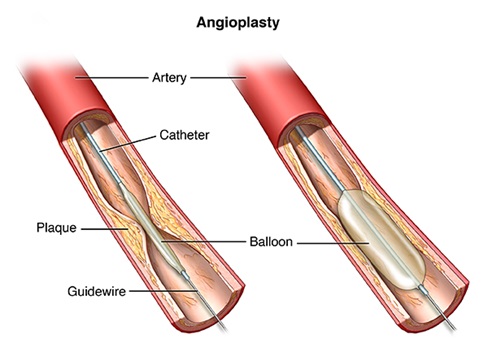
Angioplasty is an endovascular procedure used to improve blood flow through a narrowed or blocked artery.
A catheter is guided into the artery and a balloon is used to open the narrowed segment. Depending on the location, anatomy and nature of the blockage, other devices or a stent may sometimes be required.
Angioplasty may be considered in patients with significant symptoms or limb-threatening circulation problems when the vascular anatomy is suitable.
The aim is not simply to make the angiogram look better.
The aim is to improve the blood supply for a meaningful reason, such as improving function, relieving appropriate ischaemic symptoms or supporting wound and tissue healing in patients with severe circulation compromise.
Is a Stent Always Put During Angioplasty?
No.
A stent is one of several tools that may be used during endovascular treatment, but it is not automatically required for every artery or every blockage.
The decision depends on factors such as:
- where the narrowing is located
- how long the diseased segment is
- the condition of the artery
- the response to balloon treatment
- the overall treatment strategy
These are anatomical decisions that are made after assessing the patient and the vascular imaging.
This approach allows doctors to treat complex arterial blockages more effectively while reducing surgical trauma.
When Is Bypass Surgery Considered?
Bypass creates a new route for blood to travel around a blocked segment of artery.
The bypass may use the patient’s own vein or, in selected situations, a graft material. Dr Sravan’s current PAD page includes bypass as part of the available arterial-treatment spectrum.
Bypass may be appropriate when the pattern of arterial disease, patient factors and treatment goal favour a surgical approach.
Sometimes angioplasty is the better option. Sometimes bypass offers a more appropriate route. In selected complex cases, surgical and endovascular techniques may even be combined.
There is no single procedure that is best for every PAD patient.
This approach allows doctors to treat complex arterial blockages more effectively while reducing surgical trauma.
PAD in a Patient With Diabetes Needs Particular Attention
This is an area where vascular assessment can make an important difference.
A person with diabetes may have:
- reduced sensation because of neuropathy
- a wound caused by pressure or trauma
- infection
- reduced arterial blood flow
- more than one of these problems at the same time
Because sensation may be reduced, a patient may not feel the severity of a foot injury in the usual way.
And if circulation is poor, simply changing the dressing repeatedly does not correct the underlying blood-flow problem.
For a diabetic foot wound, I want to know:
Is there infection?
Is there pressure on the wound?
Is enough blood reaching the foot to support healing?
Does the patient need revascularisation?
Advanced PAD with tissue loss is best treated as a combination of circulation care, wound care, infection management and pressure management rather than treating each issue separately.
This approach allows doctors to treat complex arterial blockages more effectively while reducing surgical trauma.
What Happens After Angioplasty or Bypass?
Recovery depends on the procedure performed, the location and extent of arterial disease, other medical conditions and whether the patient also has a wound or infection.
A patient being treated only for walking symptoms has a very different recovery pathway from a patient who comes with an infected diabetic foot wound and severely reduced circulation.
Follow-up may involve:
- checking symptoms and walking ability
- examining pulses and the treated limb
- monitoring wounds
- vascular tests when clinically required
- reviewing medicines
- controlling diabetes, BP and cholesterol
- avoiding tobacco
- ongoing foot care
PAD does not disappear simply because one narrowing has been treated. It is a long-term vascular condition, and risk-factor treatment remains important after revascularisation.
This approach allows doctors to treat complex arterial blockages more effectively while reducing surgical trauma.
Can PAD Come Back After Treatment?
The treated artery can sometimes narrow again, and disease can also progress in other arterial segments.
This is one reason follow-up matters.
The chance of needing further treatment is not identical for every patient. It depends on the artery treated, disease pattern, procedure used and individual risk factors.
I would rather explain this before treatment than give a patient the impression that angioplasty permanently removes the possibility of future arterial disease.
This approach allows doctors to treat complex arterial blockages more effectively while reducing surgical trauma.
When Should You See a Vascular Surgeon?
I would recommend vascular evaluation if you have:
- recurring calf, thigh or buttock pain while walking
- a noticeable reduction in how far you can walk
- persistent foot or toe pain at rest
- a foot that has become colder or changed colour
- a wound on the toe or foot that is not healing
- diabetes with a new or persistent foot wound
- gangrene or blackening of a toe
- a previous diagnosis of PAD with worsening symptoms
- an angiography or Doppler report showing significant leg artery disease and you need to understand the treatment options
If symptoms appear suddenly, particularly severe pain associated with a cold, pale, numb or weak limb, seek urgent emergency evaluation rather than waiting for a routine appointment.
This approach allows doctors to treat complex arterial blockages more effectively while reducing surgical trauma.
Why Consult Dr. Sravan for Peripheral Arterial Disease (PAD) Treatment
Peripheral Arterial Disease requires expert evaluation and timely treatment to restore blood flow and prevent complications. Dr. Sravan, CPS, specializes in the diagnosis and treatment of arterial disorders using modern vascular and endovascular techniques.
He has been recognized among the Best Doctors in South India by Outlook Magazine, highlighting his dedication to providing advanced vascular care and improving patient outcomes.
Expertise in Advanced PAD Treatment
✔ Specialized care for leg artery blockages and circulation disorders
✔ Expertise in angioplasty, stent placement, and hybrid vascular procedures
✔ Focus on limb preservation and improved mobility
✔ Comprehensive vascular assessment with modern diagnostic tools
✔ Recognized among Best Doctors in South India – Outlook Magazine
Dr. Sravan works closely with patients to manage PAD through a combination of lifestyle guidance, medical treatment, and advanced vascular procedures when needed.
Preventing Peripheral Arterial Disease
Although PAD cannot always be prevented, certain habits can significantly reduce the risk. Preventive measures include:
- Avoiding tobacco use
- Maintaining healthy cholesterol levels
- Regular physical activity
- Maintaining healthy body weight
- Controlling diabetes and blood pressure
- Routine health check-ups
Early management of cardiovascular risk factors plays an important role in preventing PAD.
How I Approach PAD Treatment
When I see a patient with PAD, my aim is not to recommend the most aggressive treatment. My aim is to understand what the circulation problem is doing to that particular patient.
For one person, the right next step may be medical treatment and walking therapy.
For another, it may be angioplasty.
For someone with extensive disease, surgery may be more appropriate.
And for a diabetic patient with a non-healing wound, restoring blood flow may need to be planned together with infection control and wound treatment.
That is why I prefer to make the treatment decision after seeing the patient, examining the leg and reviewing the circulation properly, rather than deciding from one scan report alone.
Book an Appointment with Dr. Sravan
What is the first sign of peripheral arterial disease?
One of the earliest signs of PAD is leg pain or cramping while walking, known as intermittent claudication. The pain usually improves after resting.
Is peripheral arterial disease serious?
PAD can become serious if untreated because it may lead to complications such as ulcers, infections, or gangrene. It also increases the risk of heart attack and stroke.
Can PAD be cured?
While PAD cannot always be completely cured, it can be effectively managed with lifestyle changes, medications, and medical procedures that improve blood flow.
Who is at highest risk of PAD?
People with diabetes, smokers, individuals with high blood pressure or high cholesterol, and older adults have a higher risk of developing PAD.
Is surgery always required for PAD?
Not all patients require surgery. Many individuals can manage PAD with lifestyle changes and medication. Surgical or interventional treatments are usually recommended for more advanced disease.
Can exercise help improve PAD symptoms?
Yes. Regular walking exercises are often recommended because they help improve circulation and increase the distance a person can walk without pain.
