
By Dr. Sravan C.P.S, Vascular & Endovascular Surgeon
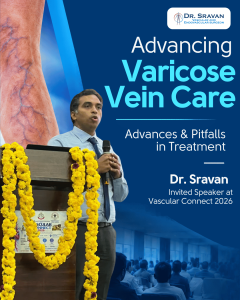
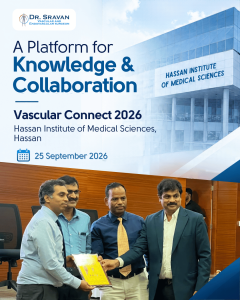
I was invited to speak at Vascular Connect 2026 at Hassan Institute of Medical Sciences, Hassan, on 25 September 2026. My talk focused on advances and pitfalls in varicose vein treatment. It was an opportunity to share insights with colleagues and discuss how careful assessment supports treatment planning.
The photographs from this event record that exchange. For patients, the useful message is straightforward: understanding the vein problem comes before choosing a procedure. A treatment should fit the findings, symptoms and individual needs of the person receiving it.
What did I discuss at Vascular Connect 2026?
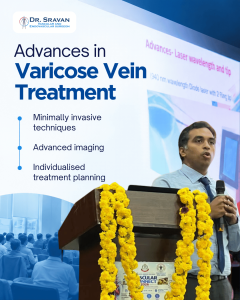
The session explored advances and challenges in varicose vein care. The event carousel highlights minimally invasive techniques, imaging and individualised treatment planning. These subjects belong together. A procedure may be technically advanced, but its value depends on using it for an appropriate clinical problem.
Talking about pitfalls is equally necessary. Patients need to understand the reasons for treatment, the alternatives and the limits of what a procedure can achieve. A photograph or a description of a new technique cannot answer those questions for an individual patient.
Why does assessment come before choosing a vein treatment?
Varicose veins are enlarged superficial veins. Faulty valves can allow blood to flow backwards, a problem called reflux. However, the visible vein alone does not provide a complete treatment plan.
Symptoms, skin changes, previous treatment and ultrasound findings all matter. Duplex ultrasound combines an image of the veins with information about blood flow. It helps identify reflux and map the veins before treatment. You can read how this fits into a vascular laboratory assessment.
The NICE recommendations on varicose veins also describe the role of duplex ultrasound in diagnosis and planning. This is supporting clinical information, rather than a transcript of the conference session.
Does a newer procedure suit every patient?
No single technique suits every pattern of vein disease. Treatment options can include heat-based vein closure, ultrasound-guided foam treatment or surgery, depending on suitability. The plan should also account for the patient’s preferences and health.
Before agreeing to treatment, ask what the scan shows, why the proposed option fits, and what follow-up involves. It is also reasonable to ask whether more than one session could be needed. Clear answers help set realistic expectations.
What do the event photographs show?
The carousel follows the session from the invited talk to the wider professional exchange. It includes the presentation, the host institution, discussion of vein-treatment advances and a closing reflection on sharing knowledge. The images are presented in their original sequence to preserve that context.
When should someone seek an assessment for varicose veins?
Arrange an assessment if visible veins cause persistent aching, itching, swelling or skin changes. A leg wound that is slow to heal also needs medical attention. Bleeding from a vein requires prompt care.
Sudden one-sided leg swelling or a newly painful vein should not be assumed to be ordinary varicose veins. Seek urgent medical assessment. If swelling occurs with sudden breathlessness or chest pain, seek emergency care.
Where can you see the original event update?
The Vascular Connect 2026 post on my Instagram profile provides the original event update and carousel. The event took place on 25 September; the social post was shared later.
You can learn more about my vascular and endovascular practice, or arrange a consultation in Bangalore to discuss symptoms and existing scan reports.
Questions about the Vascular Connect update
Where was Vascular Connect 2026 held?
The event described here took place at Hassan Institute of Medical Sciences in Hassan, Karnataka, on 25 September 2026.
What was my role?
I attended as an invited speaker and shared insights on advances and pitfalls in varicose vein treatment.
Was this a patient treatment camp?
This update documents a professional knowledge-sharing event. It does not describe a screening camp or report individual patient outcomes.
Does every visible vein need a procedure?
No. Symptoms, examination and scan findings guide the discussion. The appearance of a vein alone does not decide the treatment.
Can a conference update tell me which treatment I need?
No. It explains the professional activity and relevant clinical principles. An individual assessment is needed to recommend treatment.
