Skip to content
When fibroids cause heavy bleeding, pelvic pressure, pain or anaemia, women are often told about three main treatment options: uterine artery embolization, myomectomy and hysterectomy. Each can be appropriate, but they do not achieve the same thing.
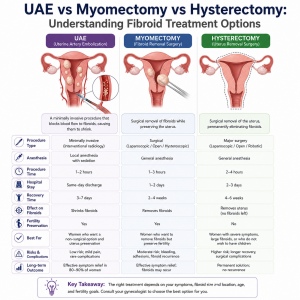
UAE reduces the blood supply to fibroids so that they shrink gradually. Myomectomy removes fibroids while keeping the uterus. Hysterectomy removes the uterus and is the definitive treatment for fibroids. The right option depends on your symptoms, fibroid number and location, age, future pregnancy plans, overall health and what matters most to you.
What are fibroids and when do they need treatment?
Fibroids are non-cancerous growths that develop in or around the uterus. Many women have fibroids without symptoms and do not need treatment.
Treatment may be considered when fibroids cause:
- Heavy or prolonged periods
- Passing large blood clots
- Iron-deficiency anaemia
- Pelvic pain, pressure or a feeling of heaviness
- Frequent urination from pressure on the bladder
- Constipation or pressure on the bowel
- Pain during sex
- A visibly enlarged abdomen
- Difficulty conceiving in selected situations
- Repeated symptoms despite medicines
The treatment decision should not be based on fibroid size alone. A small fibroid inside the uterine cavity can affect bleeding or fertility more than a much larger fibroid on the outside of the uterus.
What is uterine artery embolization for fibroids?
Uterine artery embolization, also called UAE or uterine fibroid embolization, is an image-guided procedure that treats fibroids by reducing their blood supply.
A thin catheter is passed through an artery in the wrist or groin. Using live imaging, the doctor guides the catheter to the uterine arteries and delivers tiny particles that reduce blood flow to the fibroids. The treated fibroids then shrink gradually over time.
UAE does not remove the fibroids during the procedure. It aims to reduce symptoms such as heavy bleeding, pressure and pain by reducing the fibroids’ blood supply.
The uterus remains in place. However, preserving the uterus is not the same as guaranteeing future fertility. Women who may want pregnancy in the future need a specific discussion with a gynaecologist and, when appropriate, a fertility specialist.
Learn more about Uterine Artery Embolization treatment.
What is myomectomy?
Myomectomy is an operation that removes fibroids while keeping the uterus.
Depending on the fibroids’ size and location, myomectomy may be performed through the vagina and cervix, through keyhole surgery or through an abdominal incision. A gynaecologist decides the most suitable route after reviewing scans and symptoms.
Myomectomy is commonly considered when future pregnancy is an important priority, particularly if fibroids are affecting the uterine cavity or are thought to be contributing to infertility, miscarriage or pregnancy complications.
It is important to understand that myomectomy removes existing fibroids but does not prevent new fibroids from developing later.
What is hysterectomy?
Hysterectomy is the surgical removal of the uterus. It is the only definitive treatment for fibroids because fibroids cannot return after the uterus has been removed.
A hysterectomy may be considered when symptoms are severe, other treatments have not worked, fibroids are very large or complex, or a woman does not wish to preserve her uterus or carry a future pregnancy.
A hysterectomy ends menstrual periods and removes the possibility of carrying a pregnancy. Whether the ovaries are retained depends on the patient’s age, medical history and the reason for surgery. This should be discussed clearly with the gynaecology team.
Is myomectomy better than hysterectomy?
Neither is universally better.
Myomectomy may be the preferred option when preserving the uterus or planning a future pregnancy is important. It removes fibroids while allowing the uterus to remain.
Hysterectomy may be the better option when a woman wants a definitive solution, has completed her family, has severe recurring symptoms or does not want the possibility of fibroids returning.
The choice is personal as well as medical. A good consultation should not pressure a woman toward uterus removal or toward uterus preservation. It should explain the likely benefits, recovery, risks and future implications of each option.
Is UAE better than myomectomy?
UAE and myomectomy treat fibroids in different ways.
UAE may be attractive when there are multiple fibroids, when an individual wants to avoid an abdominal operation or when symptom control is the main goal. It can treat the blood supply to several fibroids during one procedure.
Myomectomy may be more suitable when fibroids need to be removed directly, particularly when fertility is a major priority or when a fibroid is distorting the uterine cavity.
The key distinction is this:
- UAE aims to shrink fibroids and improve symptoms.
- Myomectomy aims to remove fibroids while preserving the uterus.
- Hysterectomy removes the uterus and prevents fibroid recurrence.
For women who are actively planning pregnancy, myomectomy is often discussed more strongly because fertility outcomes after UAE are still not fully predictable.
Which is safer, UAE or myomectomy?
Both UAE and myomectomy can be safe when the right procedure is chosen for the right patient and performed by an experienced team.
Their risks are different.
UAE avoids an abdominal incision and usually has a shorter initial recovery. However, it involves artery access, X-ray guidance and post-procedure cramping. There is also a possibility that symptoms may persist or that additional treatment may be needed later.
Myomectomy involves surgery and anaesthesia. Risks can include bleeding, infection, scar tissue formation and fibroid recurrence. Recovery depends on whether the procedure is hysteroscopic, laparoscopic or abdominal.
The safer option is not simply the less invasive option. It is the one that best matches the fibroids, symptoms, fertility plans and overall health of the patient.
Is UAE safer than hysterectomy?
UAE is less invasive than hysterectomy and usually involves a shorter recovery, but that does not make it automatically safer for every woman.
Hysterectomy is a major operation, with surgical and anaesthesia considerations. It is also definitive, meaning fibroids cannot recur after the uterus is removed.
UAE preserves the uterus and avoids an abdominal operation. However, it does not suit every fibroid pattern or every patient. Some women may need further treatment later, including myomectomy or hysterectomy.
The right question is not “Which procedure is safest for everyone?” It is “Which procedure offers the best balance of symptom relief, recovery and long-term expectations for me?”
Does UAE shrink fibroids?
Yes. UAE reduces blood supply to fibroids, causing them to shrink gradually.
Some women notice improvement in heavy bleeding or pressure symptoms within weeks. Shrinkage and the full symptom response usually develop over several months. Follow-up may include imaging, symptom review and blood tests if heavy bleeding had caused anaemia.
There is no exact percentage of shrinkage that can be promised. The response depends on fibroid size, number, location and blood supply. More importantly, the goal is meaningful improvement in symptoms and daily life.
What happens after UAE?
After UAE, pelvic cramping and pain are common in the first few days. Some women may also experience tiredness, nausea, a mild feverish feeling or temporary vaginal discharge. These symptoms are managed with medicines and follow-up guidance.
Recovery is usually shorter than after an abdominal operation, but it is still a real recovery. Women should plan for rest and follow the care team’s advice about work, activity, bathing, medicines and warning signs.
You should contact your treating team urgently if you develop severe or worsening pain, heavy bleeding, high fever, foul-smelling discharge, dizziness or symptoms that concern you.
Can UAE help women with multiple fibroids?
UAE can be useful when there are multiple fibroids because it treats the blood supply to the fibroids rather than requiring each one to be removed individually.
That said, every fibroid pattern is different. Large fibroids, fibroids close to the uterine cavity, pedunculated fibroids and coexisting conditions such as adenomyosis require careful review. Ultrasound and MRI may be used to plan treatment.
What does fertility mean for UAE, myomectomy and hysterectomy?
This is often the most important part of the decision.
Hysterectomy is not suitable for women who wish to carry a future pregnancy because the uterus is removed.
Myomectomy is commonly considered when fertility or pregnancy is a priority. It preserves the uterus and removes fibroids directly, although future pregnancy planning still depends on the fibroid type, surgical approach and the condition of the uterus.
Pregnancy can happen after UAE, but the effect of UAE on fertility and pregnancy outcomes is still being studied. UAE should not be presented as a fertility treatment. If future pregnancy is important, the decision should be made with a gynaecologist and fertility specialist after a detailed review of the fibroids and reproductive goals.
When should fibroid symptoms be assessed promptly?
Do not ignore symptoms such as:
- Bleeding that soaks pads rapidly or causes faintness
- Severe pelvic pain
- Worsening breathlessness, dizziness or exhaustion from possible anaemia
- A rapidly enlarging abdomen
- New bleeding after menopause
- Fever with pelvic pain or abnormal discharge
- Difficulty passing urine or stool due to pressure symptoms
These symptoms need medical assessment. Some may require urgent care.
How do I choose the right fibroid treatment?
I advise women to start with the goal, not the procedure name.
If the main goal is to avoid major surgery and improve bleeding or pressure symptoms, UAE may be worth evaluating.
If future pregnancy is the priority, myomectomy may be the more suitable discussion.
If a woman wants a definitive solution and does not wish to retain her uterus, hysterectomy may be considered.
Before deciding, ask:
- Which fibroids are causing my symptoms?
- Are my symptoms affecting my blood count or daily life?
- Do I want to keep my uterus?
- Do I want to carry a pregnancy in the future?
- Could the fibroids be removed safely with myomectomy?
- Am I a suitable candidate for UAE?
- What will recovery look like for each option?
- What is the chance that I may need another procedure later?
About Dr. Sravan C.P.S
Dr. Sravan C.P.S is a Vascular & Endovascular Surgeon in Bangalore who performs image-guided artery procedures, including UAE for carefully selected fibroid patients. His role in UAE is to assess and perform the catheter-based procedure. Fibroid diagnosis, fertility planning and surgical alternatives should be discussed in coordination with a gynaecologist.
If fibroid symptoms are affecting your health or quality of life, book a consultation with Dr. Sravan to understand whether UAE may be appropriate.
Frequently Asked Questions
What is a UAE treatment for fibroids?
UAE is an image-guided procedure that reduces blood supply to fibroids so they shrink gradually. It may improve heavy bleeding, pelvic pressure and pain in selected patients.
What happens to fibroids after UAE?
The fibroids lose part of their blood supply and gradually shrink over weeks to months. Symptoms may improve before the full shrinkage is seen on imaging.
How much do fibroids shrink after UAE?
The amount of shrinkage varies between individuals and cannot be guaranteed. Symptom improvement, including reduced bleeding and pressure, is usually more important than a single scan measurement.
What is the success rate of UAE?
Published studies commonly report substantial symptom improvement for many women after UAE. Outcomes vary according to fibroid pattern, symptoms and individual health, and some women may need further treatment later.
Is myomectomy better than hysterectomy?
Myomectomy may suit women who want to preserve the uterus or plan pregnancy. Hysterectomy is definitive and may suit women who do not wish to retain the uterus or have severe recurring symptoms.
Is UAE better than myomectomy?
UAE can be a useful option for symptom control, especially with multiple fibroids or when avoiding abdominal surgery is important. Myomectomy may be preferred when future pregnancy is a priority or fibroids need to be removed directly.
Which is safer, UAE or myomectomy?
Both can be safe in appropriately selected patients. UAE avoids an abdominal operation but has different risks and follow-up needs. Myomectomy is surgical and may be more suitable for certain fibroid types and fertility goals.
Which country is best for fibroid removal?
The country is less important than choosing an experienced team with access to appropriate imaging, gynaecology input, safe procedure facilities and follow-up care. The treatment should be selected based on your fibroids and reproductive goals.