
Blood flow problems are not just about discomfort-they are often early signs of underlying vascular disease. When blood circulation is reduced or blocked, tissues do not receive adequate oxygen and nutrients. Over time, this can lead to pain, swelling, non-healing wounds, and in severe cases, tissue damage.
In clinical practice, many patients present late-after symptoms have progressed. The key is to understand that modern vascular treatments are highly advanced, minimally invasive, and designed to restore circulation before complications occur.
Blood flow problems refer to:
- Narrowing or blockage of arteries or veins
- Reduced oxygen supply to tissues
- Progressive conditions that worsen without treatment
What Causes Blood Flow Problems?
From a vascular perspective, blood flow issues typically arise due to structural or functional abnormalities in blood vessels.
The most common causes include:
- Atherosclerosis (arterial blockage): Plaque buildup narrows arteries and reduces blood supply
- Thrombosis (blood clots): Sudden blockage of veins or arteries
- Venous valve failure: Leads to backward flow and pooling of blood
- Diabetes-related vascular damage: Affects small and large blood vessels
- Chronic inflammation: Damages vessel walls over time
These conditions do not develop overnight. They progress gradually and require timely intervention.
Medical Conditions Linked to Circulation Problems
In practice, the following conditions are frequently seen:
- Peripheral Arterial Disease (PAD): Reduced blood flow to legs causing pain during walking
- Deep Vein Thrombosis (DVT): Clot formation leading to swelling and risk of complications
- Chronic Venous Insufficiency: Long-standing vein dysfunction causing edema and skin changes
- Diabetic Foot: Combination of poor circulation and nerve damage
- Critical Limb Ischemia: Advanced stage with risk of tissue loss
These conditions are not isolated-they often overlap and require a comprehensive vascular approach.
Symptoms That Indicate Poor Blood Flow
Patients often ignore early signs. However, these symptoms should be taken seriously:
- Pain in legs while walking (claudication)
- Persistent swelling or heaviness
- Skin discoloration or darkening
- Cold or numb extremities
- Non-healing wounds or ulcers
- Visible dilated veins
- Reduced walking distance over time
These symptoms indicate compromised circulation and require evaluation.
Harmless vs Serious Circulation Problems
| Factor | Mild Circulation Issue | Advanced Blood Flow Problem |
|---|---|---|
| Pain | Occasional discomfort | Persistent, activity-limiting |
| Walking Ability | Normal | Reduced distance |
| Skin Changes | None | Darkening, ulcers |
| Swelling | Temporary | Chronic |
| Risk | Low | High (risk of tissue damage) |
Why Blood Flow Problems Worsen Over Time
Blood vessels are dynamic structures. When a blockage begins, the body initially compensates. However:
- Progressive narrowing reduces blood supply
- Collateral circulation becomes insufficient
- Tissue oxygen levels drop
- Symptoms worsen gradually
This is why early-stage symptoms are often mild but become severe if untreated.
Advanced Treatments for Blood Flow Problems
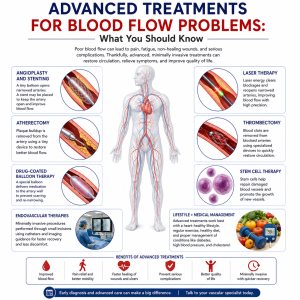
Modern vascular care focuses on restoring blood flow with minimal invasion. The goal is not just symptom relief-but preventing long-term complications.
1. Angioplasty and Stenting
This is one of the most commonly performed procedures for arterial blockages.
- A catheter is inserted through a small puncture
- A balloon is used to open the blocked artery
- A stent is placed to maintain blood flow
Best suited for: Peripheral arterial disease (PAD)
Clinical advantage:
Restores circulation immediately with minimal recovery time.
2. Endovascular Thrombectomy (Clot Removal)
Used in cases of acute or subacute thrombosis.
- Specialized devices remove the clot
- Blood flow is restored rapidly
- Reduces risk of long-term vein damage
Best suited for: Deep vein thrombosis (DVT)
Clinical importance:
Prevents complications like post-thrombotic syndrome.
3. Laser and Radiofrequency Ablation
These are advanced treatments for venous disorders.
- Heat energy is used to seal faulty veins
- Blood is redirected to healthy veins
- Performed as a daycare procedure
Best suited for: Varicose veins and venous insufficiency
Outcome:
Reduced swelling, pain, and improved circulation.
4. Embolization Procedures
Highly specialized vascular techniques used to block abnormal blood flow.
Includes:
Clinical use:
Treats conditions without open surgery.
5. Bypass Surgery
Reserved for advanced cases where minimally invasive options are not sufficient.
- A graft is used to bypass blocked arteries
- Restores blood flow to affected areas
Best suited for: Severe arterial disease
Treatment Comparison
| Treatment | Indication | Invasiveness | Recovery |
|---|---|---|---|
| Angioplasty | Arterial blockage | Minimally invasive | Fast |
| Thrombectomy | Blood clot | Minimally invasive | Fast |
| Laser Ablation | Varicose veins | Minimally invasive | Very fast |
| Embolization | Abnormal vessels | Minimally invasive | Fast |
| Bypass Surgery | Severe disease | Surgical | Moderate |
Who Is at Risk of Blood Flow Problems?
In clinical observation, high-risk groups include:
- Patients with diabetes
- Long-term smokers
- Individuals with high cholesterol or hypertension
- Sedentary professionals
- Elderly individuals
- Those with a history of vascular disease
Risk factors often overlap, accelerating disease progression.
When Should You Seek Medical Attention?
Do not delay evaluation if you experience:
- Pain while walking that improves with rest
- Persistent swelling or heaviness
- Non-healing wounds
- Sudden onset swelling in one limb
- Skin discoloration or ulcers
If you are in Bangalore, especially around Basavanagudi or South Bangalore, early vascular assessment helps identify the exact cause and guide appropriate treatment.
Can Blood Flow Problems Be Prevented?
Prevention focuses on improving vascular health:
- Regular physical activity
- Blood sugar and BP control
- Smoking cessation
- Healthy diet
- Weight management
FAQs
What is the most effective treatment for blocked arteries?
Angioplasty with stenting is commonly used and provides immediate improvement in blood flow.
Are these procedures safe?
Yes, most are minimally invasive with high success rates when performed early.
How do I know if my condition is serious?
Symptoms like pain while walking, ulcers, or persistent swelling indicate advanced disease.
Is surgery always required?
No. Most conditions can be managed with minimally invasive techniques.
How quickly can recovery happen?
Many patients resume normal activity within a few days after endovascular procedures.
Conclusion
Blood flow problems should never be ignored, especially when symptoms persist or worsen over time. With advancements in vascular medicine, most conditions can now be treated effectively using minimally invasive techniques that restore circulation and improve quality of life.
From a clinical standpoint, early diagnosis and timely intervention remain the most important factors in preventing complications and achieving long-term outcomes.