
Swelling in the body, medically called edema, happens when excess fluid builds up in the tissues. It commonly affects the legs, feet, hands, and face. While mild swelling can be temporary, persistent or unexplained swelling may indicate problems related to blood circulation, veins, or internal organs.
Swelling (edema) means:
- Fluid buildup in body tissues
- Most commonly seen in legs, feet, and hands
- Can be temporary or a sign of an underlying condition
Many people ignore swelling until it becomes painful or frequent. However, early identification of the cause is important-especially when it is linked to vascular conditions.
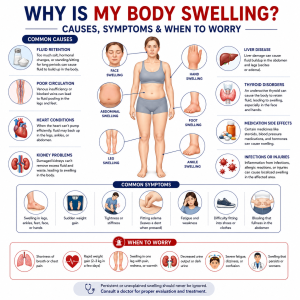
What Causes Swelling in the Body?
Swelling occurs when fluid leaks from blood vessels into surrounding tissues or when the body cannot effectively remove excess fluid.
Common causes include:
- Prolonged sitting or standing: Leads to blood pooling in the legs
- High salt intake: Causes water retention
- Hormonal changes: Common during pregnancy or menstrual cycles
- Medications: Certain BP drugs, steroids, and painkillers
- Injury or infection: Causes localized swelling due to inflammation
Temporary swelling usually improves with rest. Persistent swelling often has a medical cause.
| Location | Possible Causes |
|---|---|
| Legs & Feet | Varicose veins, prolonged standing, venous insufficiency |
| One Leg Only | Deep vein thrombosis (DVT), injury |
| Hands | Fluid retention, arthritis |
| Face | Allergy, kidney issues |
| Whole Body | Heart, liver, or kidney disease |
Medical Conditions That Can Cause Swelling
Swelling is often a symptom of an underlying condition:
- Varicose veins: Weak vein valves cause blood pooling and swelling
- Chronic venous insufficiency: Long-term circulation problem in veins
- Deep vein thrombosis (DVT): Blood clot causing sudden swelling and pain
- Peripheral arterial disease (PAD): Reduced blood flow to limbs
- Kidney disease: Leads to fluid retention
- Heart conditions: Poor circulation causes swelling in legs
- Liver disease: Causes fluid imbalance
- Lymphedema: Blocked lymphatic drainage
Persistent or worsening swelling is often linked to circulation or systemic issues and should not be ignored.
Types of Swelling and What They Indicate
Swelling in Both Legs
- Often due to fluid retention or venous insufficiency
- Usually worsens by evening
Swelling in One Leg
- May indicate deep vein thrombosis (DVT)
- Requires urgent medical attention
Swelling in Feet and Ankles
- Common in people who stand for long hours
- Can be an early sign of vein disease
Swelling in Hands or Face
- May indicate allergies, kidney issues, or hormonal changes
Generalized Body Swelling
- Often linked to kidney, liver, or heart conditions
Symptoms Associated with Swelling
Swelling may be accompanied by:
- Heaviness or tightness
- Pain or tenderness
- Skin discoloration
- Visible veins
- Reduced mobility
- Ulcers or non-healing wounds
These signs often indicate vascular involvement.
Types of Swelling: Pitting vs Non-Pitting Edema
Understanding the type of swelling helps identify whether the cause is related to circulation, veins, or the lymphatic system.
- Pitting Edema:
When you press the swollen area, it leaves a temporary dent. This type of swelling is commonly seen in fluid retention, varicose veins, chronic venous insufficiency, and heart or kidney-related conditions.
It is most frequently observed in the legs and feet and is a key sign of vascular circulation problems. - Non-Pitting Edema:
The skin does not leave a dent when pressed. This type is usually associated with lymphedema, thyroid disorders, or long-standing tissue changes.
It tends to be firm and persistent, and may not reduce easily with rest.
Pitting edema is often linked to vein-related conditions like varicose veins, while non-pitting edema may indicate lymphatic system issues that require specialized evaluation.
Who Is at Higher Risk of Swelling?
Certain individuals are more likely to develop swelling due to lifestyle, medical history, or circulation issues:
- People who sit or stand for long hours (office jobs, drivers, healthcare workers)
- Individuals with varicose veins or poor blood circulation
- Overweight or obese individuals
- Pregnant women
- Elderly individuals with reduced mobility
- Patients with diabetes, heart disease, or kidney conditions
- Those with a history of deep vein thrombosis (DVT)
Identifying risk factors early helps prevent complications and supports timely diagnosis.
Harmless vs Serious Swelling: How to Tell the Difference
| Factor | Harmless Swelling | Serious Swelling |
|---|---|---|
| Onset | Gradual | Sudden |
| Duration | Temporary (few hours) | Persistent or worsening |
| Pain | Usually absent | Often present |
| Location | Both legs | One leg or localized |
| Skin Changes | None | Redness, darkening, ulcers |
| Response to Rest | Improves | No improvement |
| Risk Level | Low | High (may indicate DVT, vein disease) |
Why Swelling Happens More in the Legs
Swelling is most commonly seen in the legs due to:
- Gravity causing fluid to accumulate in lower limbs
- Veins working harder to push blood upward
- Weak vein valves leading to blood pooling
- Increased pressure in leg veins
This is why vascular conditions often present with leg swelling first.
| Duration | Likely Cause | Action Required |
|---|---|---|
| Few hours | Fatigue, standing, travel | Rest, elevation |
| 1–3 days | Mild fluid retention | Monitor |
| More than 3 days | Circulation or systemic issue | Consult doctor |
| Sudden (same day) | Possible DVT or acute issue | Urgent evaluation |
When Should You Worry About Swelling?
You should seek medical attention if:
- Swelling appears suddenly
- Only one leg is affected
- There is pain, warmth, or redness
- Skin becomes discolored
- Swelling does not reduce with rest
- You experience breathlessness
- Swelling keeps recurring
If you are in Bangalore, especially around Basavanagudi or South Bangalore, early vascular evaluation helps identify the cause and prevent complications.
How Is Swelling Diagnosed?
Diagnosis focuses on identifying the underlying cause:
- Clinical examination: Duration, severity, and location
- Doppler ultrasound: Evaluates blood flow in veins
- Blood tests: Detect kidney, liver, or heart issues
- Imaging: Used when deeper evaluation is required
Early diagnosis prevents complications like ulcers or blood clots.
Treatment Options for Swelling
Treatment depends on the cause:
Conservative Management
- Leg elevation
- Reduced salt intake
- Regular exercise
- Weight management
Compression Therapy
- Improves circulation
- Common in venous disorders
Medications
- Diuretics (fluid removal)
- Treatment for underlying conditions
Minimally Invasive Procedures
- Laser treatment for varicose veins
- Endovascular procedures for blocked vessels
Advanced Treatments
- Clot removal in deep vein thrombosis (DVT)
- Angioplasty for arterial blockages
When to Consult Your Doctor
Consult a specialist if you notice:
- Persistent swelling in legs or feet
- Swelling with pain or heaviness
- Visible veins or skin changes
- Sudden swelling in one limb
- Non-healing wounds
Can Swelling Be Prevented?
Yes, in many cases:
- Avoid prolonged sitting or standing
- Stay physically active
- Maintain a healthy weight
- Elevate legs while resting
- Stay hydrated
- Use compression stockings if advised
FAQs
What is the most common cause of swelling in the legs?
Prolonged standing and poor circulation are the most common causes. Varicose veins are also a frequent reason.
Is swelling always serious?
No, mild swelling can be temporary. Persistent or painful swelling should be evaluated.
Can swelling indicate a blood clot?
Yes. Sudden swelling in one leg with pain may indicate DVT and requires urgent care.
Why does swelling increase at night?
Swelling worsens in the evening due to prolonged standing or sitting, which causes fluid accumulation in the legs.
How do you know if swelling is due to circulation problems?
Swelling with heaviness, visible veins, skin discoloration, or pain often indicates vascular issues.
Can swelling be treated permanently?
Yes, if the underlying cause is identified and treated correctly.
Conclusion
Swelling in the body is a common symptom, but it should not be ignored when it becomes persistent or associated with warning signs. Many vascular conditions, including varicose veins and circulation disorders, begin with mild swelling that gradually worsens over time.
Early evaluation and proper treatment help prevent complications and improve long-term outcomes. If swelling persists, seeking medical advice ensures accurate diagnosis and effective care.
Consult with Dr Sravan CPS today.
Vascular Surgeon in Bangalore – Dr Sravan C.P.S