
Poor blood circulation is commonly worsened by processed foods, excess salt, refined sugar, and unhealthy fats, which damage blood vessels over time. These foods increase inflammation, raise blood pressure, and reduce oxygen supply to the legs. Avoiding them and correcting diet early can significantly reduce the risk of vascular conditions like varicose veins and peripheral arterial disease.
In clinical practice, one pattern is very clear – patients with circulation problems often have long-standing dietary triggers. These are not always obvious. Many people focus only on exercise or medication, but diet quietly affects blood flow every single day.
Circulation issues in the legs usually develop gradually. By the time symptoms like swelling, heaviness, or visible veins appear, vascular stress has already been building.
This guide breaks down the worst foods for circulation, why they matter medically, and what you should actively avoid to protect your vascular health.
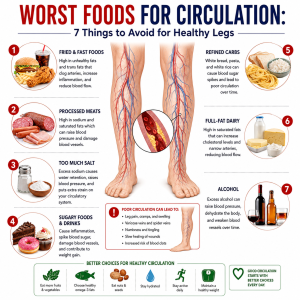
How Food Directly Impacts Blood Circulation
From a vascular perspective, blood flow depends on three key factors:
- Healthy vessel walls
- Normal blood pressure
- Unobstructed arteries and veins
Certain foods interfere with all three.
What Happens Internally
| Factor | Healthy State | Effect of Poor Diet |
|---|---|---|
| Blood vessels | Flexible, smooth | Stiff, inflamed |
| Blood flow | Consistent | Sluggish, restricted |
| Oxygen delivery | Efficient | Reduced |
| Pressure | Controlled | Elevated |
Over time, this leads to conditions like:
7 Worst Foods for Blood Circulation
1. Processed Foods
- Examples: Instant meals, packaged snacks
- Clinical impact: High sodium + preservatives
- Vascular effect: Chronic inflammation
Processed foods are one of the most consistent triggers seen in patients with swelling and poor leg circulation.
2. Excess Salt (High Sodium Intake)
- Examples: Chips, pickles, processed foods
- Clinical impact: Fluid retention, high BP
- Vascular effect: Increased pressure in veins
Comparison: Normal vs High Salt Intake
| Parameter | Normal Intake | High Salt Intake |
|---|---|---|
| Blood pressure | Stable | Elevated |
| Fluid retention | Minimal | Increased |
| Leg swelling | Rare | Common |
| Vein stress | Low | High |
3. Sugary Foods and Beverages
- Examples: Soft drinks, sweets, desserts
- Clinical impact: Blood vessel damage
- Vascular effect: Reduced circulation efficiency
Excess sugar accelerates vascular damage, especially in diabetic patients.
4. Trans Fats and Fried Foods
- Examples: Fast food, deep-fried snacks
- Clinical impact: Raises LDL cholesterol
- Vascular effect: Artery narrowing
Comparison: Healthy Fat vs Trans Fat
| Type | Effect on Blood Vessels | Circulation Impact |
|---|---|---|
| Healthy fats (nuts, olive oil) | Protective | Improves flow |
| Trans fats | Damaging | Blocks arteries |
5. Red & Processed Meat (Excess Intake)
- Examples: Sausages, bacon
- Clinical impact: High saturated fat
- Vascular effect: Plaque buildup
Long-term intake contributes to arterial stiffness, reducing blood flow to the legs.
6. Alcohol (Excess Consumption)
- Clinical impact: Affects heart rhythm + BP
- Vascular effect: Irregular circulation
Moderation is critical. Excess intake disrupts vascular stability.
7. Refined Carbohydrates
- Examples: White bread, bakery products
- Clinical impact: Blood sugar spikes
- Vascular effect: Chronic inflammation
Combined Impact: What These Foods Do Together
Most patients don’t consume just one of these – it’s a combination.
Cumulative Effect on Circulation
| Habit | Long-Term Outcome |
|---|---|
| High salt + processed food | Persistent swelling |
| Sugar + refined carbs | Vessel damage |
| Trans fats + red meat | Artery blockage |
| Alcohol + poor diet | Circulatory instability |
This is where early correction makes a significant difference.
Signs Your Circulation Is Being Affected
In early stages, symptoms are subtle. With progression:
- Heaviness in legs
- Swelling in ankles
- Visible veins
- Leg pain on walking
- Numbness or tingling
These are not just “minor issues.” They often indicate underlying vascular imbalance.
What to Eat Instead
Replacing harmful foods is more effective than simply restricting.
| Category | Recommended Options | Benefit |
|---|---|---|
| Vegetables | Leafy greens | Improve vessel function |
| Healthy fats | Nuts, seeds | Reduce inflammation |
| Natural boosters | Garlic, ginger | Enhance blood flow |
| Fruits | Berries, citrus | Antioxidant support |
| Grains | Whole grains | Stabilize circulation |
When to See a Vascular Specialist
You should not ignore symptoms if you notice:
- Swelling that persists daily
- Leg pain while walking (claudication)
- Visible varicose veins increasing
- Skin color changes or ulcers
- Numbness or reduced sensation
If you are experiencing these symptoms in Bangalore, especially around Basavanagudi or nearby areas, early vascular evaluation helps prevent progression into more serious conditions.
FAQs
What foods cause poor blood circulation?
Processed foods, high salt intake, sugar, trans fats, and refined carbohydrates are the most common contributors to poor circulation.
Can diet alone improve circulation?
Diet plays a major role, especially in early stages. However, advanced conditions may require medical treatment.
What are early signs of poor circulation in legs?
Swelling, heaviness, mild pain, and visible veins are early indicators.
Is sugar bad for blood circulation?
Yes. Excess sugar damages blood vessels and reduces circulation efficiency over time.
Does salt affect leg circulation?
High salt intake increases fluid retention and pressure in veins, worsening circulation.
What is the fastest way to improve circulation?
Diet correction, regular movement, and early medical evaluation if symptoms persist.
Can poor circulation lead to serious conditions?
Yes. It can progress to varicose veins, PAD, or chronic venous insufficiency if untreated.
Conclusion
Circulation problems rarely start suddenly. They build gradually through lifestyle patterns – especially diet.
Correcting food habits early can significantly reduce vascular stress and prevent long-term complications.
Timely evaluation ensures that reversible conditions are managed before they progress further.
Book your consultation with Dr Sravan C.P.S today!