
A blood clot in the leg, medically called deep vein thrombosis (DVT), usually begins with subtle symptoms like swelling, pain, or warmth in one leg. These signs are often ignored or mistaken for muscle strain. However, in some cases, a clot can become serious if it blocks blood flow or travels to the lungs. Early identification is important because timely treatment can prevent complications and improve recovery outcomes.
As a vascular and endovascular surgeon, I often see patients who delay consultation because the symptoms initially feel minor. This article will help you understand how to recognise early signs, when to be concerned, and what steps to take.
What is a blood clot in the leg?
A blood clot forms when blood thickens and sticks together inside a vein. In the legs, this usually happens in deeper veins, which is why it is called deep vein thrombosis.
Unlike surface-level clots, DVT can affect circulation and may lead to complications if not evaluated early.
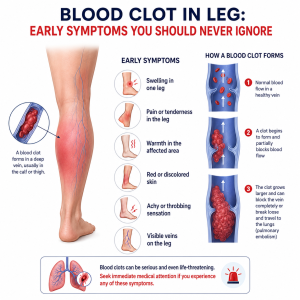
What are the first signs of a blood clot in the leg?
The early signs are often mild but should not be ignored.
- Swelling in one leg: Usually appears suddenly and is limited to one side
- Pain or tenderness: Often felt in the calf or thigh, especially while walking
- Warmth over the skin: The affected area may feel warmer than surrounding skin
- Skin discoloration: Red, bluish, or darker patches may appear
- Tightness or heaviness: A feeling of pressure rather than sharp pain
In many cases, these symptoms begin gradually and worsen over time.
How do I know if a blood clot is forming in my leg?
A clot typically develops in situations where blood flow slows down or becomes restricted.
You may notice symptoms if you have:
- Been sitting for long hours (travel, desk work)
- Recently undergone surgery
- Experienced reduced mobility due to illness
- A history of vascular problems
If symptoms appear without a clear injury, it is important to consider a vascular cause rather than assuming it is muscle strain.
Blood clot vs normal leg pain: how to tell the difference?
Many patients confuse DVT symptoms with common leg pain. The difference is important.
| Feature | Blood Clot (DVT) | Muscle Pain |
|---|---|---|
| Swelling | Usually one leg | Rare |
| Pain type | Deep, persistent | Movement-related |
| Skin temperature | Warm | Normal |
| Color change | Present | Absent |
| Cause | Circulation issue | Strain or injury |
This distinction helps guide early decision-making, but confirmation always requires medical evaluation.
Are blood clots in legs life threatening?
In some cases, yes.
If a clot breaks loose and travels to the lungs, it can cause a condition called pulmonary embolism. This can affect breathing and circulation and requires emergency care.
When should you worry about a blood clot in your leg?
You should not ignore symptoms if:
- Swelling appears suddenly without reason
- Pain increases despite rest
- Skin becomes warm or discolored
- Symptoms occur after long travel or immobility
How long before a blood clot becomes dangerous?
A clot can become serious within hours to days, especially if it moves through the bloodstream. This is why early evaluation is recommended even if symptoms seem mild.
What are the five warning signs of a blood clot?
Based on common patient presentations, the most important signs include:
- One-sided leg swelling
- Persistent deep pain
- Warm skin in the affected area
- Visible color change
- Increasing discomfort over time
Can you live with a blood clot in your leg?
Some people may not notice symptoms immediately, especially in early stages. However, untreated clots can lead to complications over time, including long-term vein damage.
Symptoms and progression can vary from person to person. What appears mild in one individual may progress differently in another.
How quickly does a blood clot happen?
Clots can form gradually over a few days or develop more rapidly depending on risk factors such as immobility, surgery, or underlying conditions.
How is a blood clot diagnosed?
Diagnosis is based on clinical evaluation and imaging.
Common tests include:
- Doppler ultrasound
- Blood tests (such as D-dimer)
- CT scan in selected cases
These tests help confirm the presence and location of the clot.
What are the treatment options?
Treatment depends on severity and patient condition.
Non-surgical approaches:
- Blood-thinning medications
- Compression therapy
- Lifestyle and mobility correction
Advanced options in selected cases:
- Catheter-based clot removal
- Thrombolysis (clot dissolving techniques)
The goal is to restore blood flow and prevent complications.
When to consult your doctor
You should consider medical evaluation if:
- Swelling or pain persists for more than a day
- Symptoms worsen gradually
- You have risk factors such as long travel, surgery, or inactivity
- There is no clear cause like injury
If you are consulting a vascular specialist in Bangalore or nearby areas, early assessment can help prevent complications and guide appropriate treatment.
FAQs
How can I check my leg for blood clots at home?
You may notice symptoms like swelling, pain, warmth, or skin discoloration in one leg. However, these signs are not always reliable. A Doppler ultrasound is required to confirm whether a blood clot is present.
How do I know if a blood clot is forming in my leg?
Early signs include swelling in one leg, deep pain in the calf or thigh, and warmth over the affected area. These symptoms often appear after long periods of sitting or reduced movement.
Are blood clots in the leg life-threatening?
In some cases, yes. If a clot travels to the lungs, it can cause a pulmonary embolism, which is a serious medical condition that requires immediate treatment.
Can a blood clot happen without any injury?
Yes, many blood clots develop without any visible injury. Common causes include prolonged sitting, recent surgery, poor circulation, or underlying medical conditions.
How long before a blood clot becomes dangerous?
A blood clot can become dangerous within hours to days if it dislodges and travels through the bloodstream. This is why early diagnosis is important even if symptoms seem mild.
Is walking good for a blood clot in the leg?
Movement may help improve circulation, but walking without proper diagnosis can be risky. It is important to consult a doctor before continuing physical activity if a clot is suspected.
Conclusion
Blood clots in the leg often begin with symptoms that are easy to overlook. However, early recognition and timely medical evaluation play a key role in preventing serious complications. Paying attention to changes such as swelling, pain, or skin warmth can help you act early and avoid long-term issues.
