
Leg swelling in older adults is common, but it should not be dismissed as “just age.” It happens when fluid builds up in the tissues of the feet, ankles or legs. Sometimes this follows a day of prolonged sitting or standing. At other times, it may be related to weak leg veins, certain medicines, heart, kidney or liver conditions, a blood clot, or a lymphatic problem.
The pattern matters. Swelling that gradually worsens by evening may suggest a vein problem. Sudden swelling in one leg, especially with pain, redness, warmth, chest pain or breathlessness, needs urgent medical attention.
Is leg swelling normal in old age?
Ageing can make leg swelling more likely, but it is not a diagnosis by itself.
As we grow older, the calf muscles may become less active, vein valves may become weaker, and long-term conditions such as diabetes, high blood pressure, arthritis, heart disease or kidney disease may become more common. Many older adults also take several regular medicines, some of which can contribute to ankle swelling.
The right approach is not to guess the cause from appearance alone. A doctor should look at whether one or both legs are swollen, how quickly it started, whether there is pain or skin change, and what other health conditions or medicines are involved.
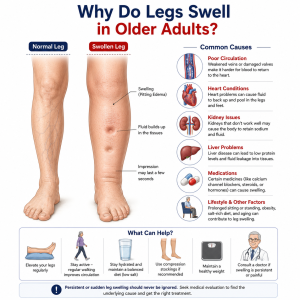
What are the common causes of swollen legs in older adults?
1. Chronic venous insufficiency
One of the most common vascular causes is chronic venous insufficiency. In this condition, the valves inside the leg veins do not close properly. Blood can pool in the lower legs instead of moving efficiently back toward the heart.
Typical clues include:
- Swelling around the ankles that worsens through the day
- A heavy, tired or tight feeling in the legs
- Visible varicose veins
- Itching, aching or night cramps
- Brown or dark skin changes near the ankles
- Recurrent swelling that improves somewhat after lying down
When these symptoms are present, a venous Doppler ultrasound can help assess the leg veins. Learn more about varicose veins and venous disorders.
2. Reduced movement, prolonged sitting or standing
Calf muscles act like a natural pump for the leg veins. When an older adult sits for many hours with the feet down, stands in one place for long periods, or becomes less mobile after illness or surgery, fluid can collect around the ankles.
This type of swelling may improve with gentle walking, ankle movements and leg elevation. However, persistent swelling still deserves review—especially if there is pain, skin change or an underlying health condition.
3. Medicines
Some medicines can cause or worsen ankle and leg swelling. These can include certain blood-pressure medicines, anti-inflammatory pain medicines, hormone-related treatments and some medicines used for diabetes.
Do not stop a prescribed medicine on your own. Instead, note when the swelling started and discuss it with the prescribing doctor. The dose, timing or medicine itself may need review.
Swelling tablets are not automatically the answer. They help only in selected causes of fluid retention and may not correct swelling from weak leg veins. Read: Tablets for Leg Swelling: When Do They Actually Work?
4. Heart, kidney or liver conditions
When the heart, kidneys or liver are not working as they should, the body may retain fluid. Swelling may affect both feet and ankles and can sometimes be associated with weight gain, tiredness, reduced exercise tolerance or breathlessness.
These causes require assessment by the appropriate medical team. A vascular examination may still be useful when circulation symptoms coexist, but the treatment must address the underlying condition.
5. Deep vein thrombosis (DVT)
A deep vein thrombosis is a blood clot in a deep leg vein. It often causes swelling in one leg rather than both, although symptoms can vary.
Warning features include:
- Sudden swelling of one calf, ankle or thigh
- New pain or tenderness in the calf
- Warmth or redness
- Swelling after recent surgery, hospitalisation, long travel or prolonged bed rest
- Breathlessness, chest pain or coughing blood
A suspected DVT requires urgent medical evaluation. Do not massage the leg or rely on home remedies. Read more about deep vein disorders and DVT.
6. Lymphoedema
The lymphatic system helps drain fluid from tissues. When lymph drainage is reduced, swelling can become persistent and may involve the foot and toes. The skin may feel firmer over time, and the swelling may not settle fully overnight.
Lymphoedema needs a proper diagnosis because its treatment plan differs from treatment for vein disease or heart-related fluid retention.
7. Injury, arthritis, infection or inflammation
A painful swollen leg after a fall, twist, joint flare-up or skin infection may not be a circulation problem. However, older adults can have more than one cause at the same time. For example, arthritis may reduce walking, while weak veins worsen ankle swelling.
A red, hot, painful leg—especially with fever—should be assessed promptly.
Why does swelling often start at the ankles?
Gravity pulls fluid downward. When a person spends much of the day sitting or standing, the ankles and feet are often the first places where fluid becomes visible.
With vein-related swelling, the ankle area may look puffy by evening, footwear may feel tighter, and sock marks may become more noticeable. In some people, pressing gently over the swollen area leaves a temporary dent. This is called “pitting,” but it does not identify the cause on its own.
The key question is why the fluid is building up and whether the pattern is changing.
When should older adults seek urgent help for leg swelling?
Seek urgent medical care if swelling is:
- Sudden and mainly in one leg
- Accompanied by calf pain, redness or warmth
- Associated with chest pain, breathlessness, fainting or coughing blood
- Rapidly worsening over hours or days
- Linked to fever or a spreading skin infection
- Associated with a non-healing wound, blackened toe or severe foot pain
- Occurring with a cold, pale or painful foot
People with diabetes should not ignore new swelling, colour change, blisters or wounds on the feet. Poor circulation and diabetic foot problems need early assessment. See diabetic foot care and circulation guidance.
What can help mild leg swelling at home?
For mild, non-sudden swelling that has already been assessed, these measures may help:
- Take short, regular walks instead of sitting for long periods.
- Move the ankles up and down while seated.
- Elevate the legs when resting, if medically appropriate.
- Avoid very long stretches of standing.
- Follow advice on salt intake from your treating doctor.
- Wear comfortable footwear and avoid tight socks or clothing around the calves.
- Keep track of whether the swelling is one-sided, daily, worsening or linked to a new medicine.
Do not start diuretics or “water tablets” without medical advice. Also, compression stockings are not suitable for every person. They should be selected after a circulation assessment, particularly if there is suspected peripheral artery disease, diabetes-related foot concerns or severe pain while walking.
How is the cause of leg swelling diagnosed?
In my practice, I begin by understanding the story behind the swelling. When did it begin? Is it in one leg or both? Is it worse by evening? Has there been recent travel, surgery, reduced movement, weight gain, breathlessness or a change in medicines?
The clinical examination may include checking:
- Skin colour, temperature and any ulcers
- Varicose veins or ankle skin changes
- Foot pulses and arterial circulation
- Signs of infection or a possible clot
- Whether swelling is pitting or firm
Depending on the findings, tests may include a venous Doppler ultrasound, arterial Doppler study, blood tests, or evaluation of heart and kidney function. If walking pain, cold feet or slow-healing wounds are present, assessment for peripheral artery disease may also be needed.
What treatment is available for leg swelling in older adults?
Treatment depends entirely on the cause.
For venous disease, the plan may include movement, leg elevation, appropriately prescribed compression, skin care and, when needed, minimally invasive vein procedures. For DVT, blood-thinning treatment may be required urgently. For heart, kidney or liver-related swelling, the treating physician will address the underlying condition and guide medicines safely.
The goal is not simply to make the leg look less swollen for a few days. It is to identify the reason for the swelling, relieve symptoms safely and prevent skin damage, ulcers, clots or avoidable loss of mobility.
When should you book a vascular consultation?
Book an assessment if leg swelling is recurring, affecting daily movement, worsening by evening, associated with varicose veins, or causing heaviness, itching, skin darkening or wounds near the ankle.
You should also seek review if the swelling continues despite lifestyle changes or if you are repeatedly relying on tablets without knowing the cause.
Frequently Asked Questions
Can old age alone cause swollen feet?
No. Age can increase the likelihood of vein disease, reduced mobility and chronic health conditions, but swelling should still be assessed in the context of a person’s symptoms, medicines and medical history.
Why is only one leg swollen in an older adult?
One-sided swelling can occur with a vein problem, injury, infection, lymphatic issue or DVT. Sudden one-sided swelling with pain, redness or warmth needs urgent evaluation.
Can blood-pressure tablets cause leg swelling?
Yes. Some blood-pressure medicines can contribute to ankle swelling. Do not stop them without advice; ask the prescribing doctor to review the medicine and your symptoms.
Does leg swelling always mean a heart problem?
No. Weak leg veins, medicines, reduced movement, lymphatic problems and injury can also cause swelling. Heart, kidney and liver causes should be considered when swelling is in both legs or is accompanied by other symptoms.
Can compression stockings reduce swelling?
They can help selected patients with venous swelling, but they should be recommended after assessing circulation. They may not be appropriate for everyone.
How can I tell if leg swelling is from varicose veins?
Swelling that worsens by evening along with heaviness, aching, visible veins, itching, ankle skin darkening or past leg ulcers makes venous disease more likely. A venous Doppler ultrasound can confirm the cause.
About Me
I am a Vascular & Endovascular Surgeon in Bengaluru. I evaluate vein conditions, DVT, peripheral artery disease, diabetic-foot circulation issues and other vascular concerns, with treatment planned around the individual cause and severity of symptoms.
If you or an older family member has persistent leg swelling, a proper assessment can replace uncertainty with a clear plan. Book a consultation with me for a vascular evaluation.