
Stomach pain after eating is common. For most people, it may be related to acidity, gas, an ulcer, gallbladder disease or another digestive condition. But when pain comes back after meals, makes you eat less and causes weight loss, one less common cause needs attention: chronic mesenteric ischaemia.
This condition occurs when the arteries supplying blood to the intestines are narrowed. After you eat, the bowel needs more blood for digestion. If the blood supply cannot increase enough, pain can occur. This is sometimes called abdominal angina. It is not the most common cause of post-meal pain, but it should not be missed.
When can stomach pain after eating point to a blood-flow problem?
The timing of the pain often provides the clue.
With chronic mesenteric ischaemia, pain commonly begins 15 to 60 minutes after eating. It may last for an hour or two, then settle until the next meal. Because the person starts to associate food with pain, they may gradually reduce meal size or skip meals altogether.
I become more concerned when there is a clear pattern of:
- Pain after most meals, not just after spicy or oily food.
- Pain that keeps returning over weeks or months.
- Eating less because of fear of pain.
- Unexplained weight loss.
- Nausea, bloating, loose stools or vomiting with the pain.
- A history of smoking, diabetes, high cholesterol, high blood pressure, heart disease or artery blockages elsewhere.
The pain may feel like cramping, pressure, aching or severe indigestion. It is often felt in the upper or middle part of the abdomen. However, pain alone cannot confirm the diagnosis. Many abdominal conditions can look similar.
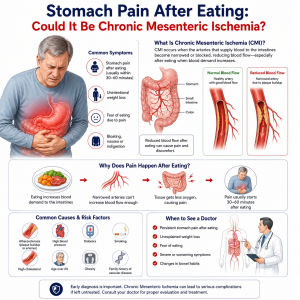
What is chronic mesenteric ischaemia?
Chronic mesenteric ischaemia develops when plaque gradually narrows one or more arteries supplying the digestive organs. These arteries include the celiac artery, superior mesenteric artery and inferior mesenteric artery.
Plaque is the same fatty material that can build up in the arteries of the heart, brain, kidneys and legs. It gradually makes the artery stiff and narrow. At rest, the intestines may receive enough blood. But after a meal, the demand rises. A narrowed artery may not be able to deliver enough blood, leading to pain.
For a fuller explanation of the condition, including the arteries involved, diagnosis and emergency warning signs, read our guide to mesenteric artery disease.
Why does the pain come after food?
Digestion requires increased blood flow. Think of it as turning up the water supply when several taps are opened at once.
In a healthy artery, blood flow increases easily after a meal. In a narrowed mesenteric artery, the increased demand cannot be met. The bowel then receives less oxygen than it needs, which produces pain.
This is why chronic mesenteric ischaemia can have a very specific pattern:
| Feature | Typical chronic mesenteric ischaemia pattern |
| Timing | Starts after eating, often within an hour |
| Duration | May last one to two hours |
| Frequency | Repeats after meals |
| Food intake | Patient begins eating smaller meals or avoids food |
| Weight | Unintentional weight loss may develop |
| Risk profile | Often present with smoking, diabetes, high cholesterol or other arterial disease |
Not every patient has every feature. Some people first notice only reduced appetite or an unexplained change in their eating routine.
Is every pain after eating chronic mesenteric ischaemia?
No. Chronic mesenteric ischaemia is uncommon, and many more common digestive conditions can cause similar pain.
| Possible cause | Pattern that may be seen |
| Acid reflux or gastritis | Burning discomfort, sour taste, symptoms linked to certain foods or lying down |
| Peptic ulcer disease | Upper abdominal pain that may relate to meals or occur at night |
| Gallbladder disease | Pain after fatty meals, often on the right upper abdomen and sometimes radiating to the back |
| Pancreatic disease | Upper abdominal pain that may go through to the back |
| Irritable bowel syndrome | Pain linked to bowel movements, bloating or altered bowel habits |
| Chronic mesenteric ischaemia | Repeated post-meal pain with food avoidance, weight loss and vascular risk factors |
This table is not a self-diagnosis tool. Its purpose is to show why persistent pain after eating needs a proper evaluation instead of being repeatedly treated as acidity without understanding the cause.
Who is more likely to develop this condition?
Chronic mesenteric ischaemia is more likely in people who already have risk factors for atherosclerosis.
These include:
- Current or past tobacco use.
- Diabetes.
- High blood pressure.
- High cholesterol.
- Coronary artery disease or a prior heart attack.
- Stroke or carotid artery disease.
- Kidney disease.
- Known artery disease in the legs.
Patients with peripheral arterial disease may have plaque in more than one part of the circulation. PAD causes reduced blood flow to the legs; mesenteric artery disease affects blood flow to the digestive system. They are different conditions, but both can arise from the same underlying arterial process.
What symptoms should not be ignored?
Arrange a medical assessment if post-meal pain is becoming regular, especially when it is combined with food avoidance or weight loss.
The following symptoms are particularly important:
- Pain after meals that is becoming more severe or more frequent.
- A person who eats less because they expect pain after food.
- Unexplained weight loss.
- New bowel changes along with post-meal pain.
- Post-meal pain in someone with known heart, leg or carotid artery disease.
- Ongoing pain despite treatment for common digestive causes.
A sudden, severe abdominal pain is different. It can indicate acute mesenteric ischaemia, where blood flow falls abruptly. This is an emergency.
Go to the nearest emergency department immediately for sudden severe abdominal pain, persistent vomiting, blood in the stool, fainting, confusion, a swollen abdomen or severe pain in a person with atrial fibrillation or known vascular disease.
How do we check for chronic mesenteric ischaemia?
The diagnosis starts with listening carefully to the symptom pattern. The relationship between meals and pain matters. So do weight changes, medication history and vascular risk factors.
Testing may include:
Duplex ultrasound
A fasting duplex or Doppler ultrasound uses sound waves to assess blood flow through the mesenteric arteries. It is non-invasive and can help identify concerning narrowing.
CT angiography
CT angiography, also called CTA, is often used to map the arteries in detail. It can show the site and severity of a narrowing or blockage and also assess other causes of abdominal pain.
Catheter angiography
In selected patients, catheter angiography may be used when detailed treatment planning is needed. It can show the artery directly and may allow treatment to be performed during the same procedure.
Blood tests are useful for assessing general health and ruling out other concerns. However, one normal blood test does not rule out a serious blood-flow problem when symptoms and clinical suspicion are strong.
What happens if chronic mesenteric ischaemia is confirmed?
Treatment is based on the severity of symptoms, the arteries involved and the patient’s overall health.
Every patient needs risk-factor management. This means stopping smoking, controlling diabetes and blood pressure, managing cholesterol, staying physically active as advised and taking prescribed medication consistently.
However, lifestyle changes alone cannot reliably open a severely narrowed artery. When symptoms are clearly related to reduced mesenteric blood flow, restoring circulation may be necessary.
For suitable anatomy, treatment is often performed through an endovascular approach. A small catheter is guided into the artery, the narrowed area is opened with a balloon and a stent may be placed to keep the artery open. Open bypass surgery may be considered when catheter-based treatment is not suitable or cannot provide a durable result.
The right treatment is individual. It depends on the exact vessels involved, whether the disease affects one or multiple arteries, prior operations, kidney function and the overall condition of the bowel.
Read our detailed guide on when angioplasty, stenting or bypass surgery may be considered for mesenteric artery disease.
Can smaller meals or a restricted diet solve the problem?
Smaller meals may temporarily reduce the severity of post-meal pain in some patients because the bowel’s blood-flow demand is lower. But this is not treatment. It can also delay diagnosis while the person loses weight and becomes weaker.
A balanced, heart-healthy diet supports long-term vascular health. But a diet cannot safely reverse a significant mesenteric artery blockage. If eating regularly causes pain, the priority is to identify why it is happening.
A note from Dr. Sravan
In practice, the patients I worry about are not simply those with stomach pain. It is those who have quietly changed their life around that pain. They stop enjoying meals, eat only small portions and lose weight without understanding why.
If pain after eating has become a pattern, especially with vascular risk factors, it deserves a structured evaluation. The aim is not to assume the worst. It is to identify the cause early and avoid missing a treatable circulation problem.
Dr. Sravan C.P.S. is a Vascular & Endovascular Surgeon in Basavanagudi, Bengaluru. To discuss recurrent post-meal abdominal pain, known arterial disease or a second opinion, you can request a vascular consultation.
Frequently asked questions
Is stomach pain after eating always caused by acidity?
No. Acidity and gastritis are common causes, but repeated pain after meals can also be linked to gallbladder disease, ulcers, pancreatic conditions, bowel disorders or reduced blood flow to the intestines. The accompanying symptoms and risk factors matter.
What does chronic mesenteric ischaemia pain feel like?
It is often a deep cramping, aching or pressure-like pain in the upper or middle abdomen. It commonly begins within an hour after eating, may last one to two hours and returns with meals.
Why does chronic mesenteric ischaemia cause weight loss?
The pain can make patients fear food or reduce meal size. Over time, reduced food intake can cause unintentional weight loss. Weight loss should always be evaluated rather than assumed to be due to stress or diet changes.
How is chronic mesenteric ischaemia diagnosed?
Doctors consider the symptom pattern, vascular risk factors and imaging findings. Duplex ultrasound and CT angiography are commonly used to assess blood flow and identify narrowed mesenteric arteries.
Can chronic mesenteric ischaemia be treated without open surgery?
Yes, many suitable patients can be treated with an endovascular procedure such as angioplasty and stenting. Open bypass surgery is reserved for selected situations where it is more appropriate.
When is post-meal stomach pain an emergency?
Sudden severe abdominal pain, especially with vomiting, blood in the stool, fainting, confusion or a swollen abdomen, needs immediate emergency assessment. These symptoms may indicate acute rather than chronic loss of intestinal blood flow.
Can chronic mesenteric ischaemia improve with lifestyle changes alone?
Lifestyle changes lower future vascular risk and are an important part of care. But they do not reliably reopen a severely narrowed artery. Symptoms suggestive of significant reduced blood flow need vascular assessment.
