
Prediabetes often develops silently, but in many individuals, early changes can begin in the legs and feet due to subtle nerve damage and reduced blood circulation. These symptoms may appear before diabetes is fully diagnosed, making them easy to overlook.
As a vascular and endovascular specialist, I frequently evaluate patients who present with leg discomfort, numbness, or slow-healing wounds without realising these may be early signs of blood sugar imbalance. Recognising these symptoms early can help prevent progression to diabetes and avoid long-term complications.
Can prediabetes affect your legs?
Yes, prediabetes can affect the legs and feet, especially when blood sugar levels remain elevated over time.
Even before diabetes is diagnosed, the body may begin to show:
- Early nerve sensitivity changes
- Mild circulation issues
- Increased risk of foot discomfort or fatigue
These changes are subtle but important warning signs.
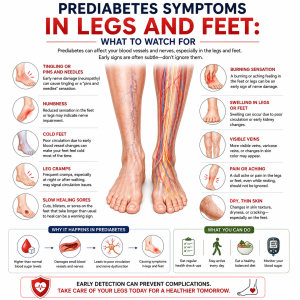
What are the early symptoms of prediabetes in legs and feet?
The symptoms are often mild and may not always be painful.
- Tingling or mild numbness in feet
- Burning sensation in legs or soles
- Leg fatigue after minimal activity
- Cold feet despite normal temperature
- Slight swelling or heaviness
These symptoms are commonly ignored or attributed to lifestyle factors.
How do you know if diabetes is affecting your legs?
As blood sugar levels remain uncontrolled, the effects become more noticeable.
- Reduced sensation in feet (neuropathy)
- Slower healing of cuts or blisters
- Dry or cracked skin
- Increased risk of infections
These signs indicate that both nerves and blood vessels may be getting affected.
What does a diabetic leg feel like?
Patients often describe it as:
- A constant tingling or “pins and needles” sensation
- Burning discomfort, especially at night
- Heaviness or tightness in calves
- Occasional sharp or shooting pain
In some cases, there may be reduced sensation instead of pain, which can be more dangerous.
What are the common warning signs of prediabetes?
Apart from leg symptoms, general signs include:
- Increased thirst
- Frequent urination
- Fatigue
- Slight weight fluctuations
- Blurred vision
However, in many patients, leg and foot symptoms appear earlier than expected.
What is the fastest way to manage prediabetes?
Prediabetes can often be reversed or controlled with early intervention.
- Blood sugar regulation through diet
- Regular physical activity
- Weight management
- Medical evaluation and monitoring
Early action significantly reduces the risk of progression.
Can you go from prediabetes to normal?
Yes, many individuals can return to normal blood sugar levels with consistent lifestyle changes and medical guidance.
However, ignoring early symptoms increases the likelihood of progression to diabetes.
What is the root cause of prediabetes?
The primary cause is insulin resistance, where the body does not respond effectively to insulin.
This leads to:
- Gradual increase in blood sugar levels
- Impact on small blood vessels
- Early nerve and circulation changes
How does prediabetes affect circulation?
Even at early stages, blood vessels can become less efficient.
- Reduced oxygen delivery to tissues
- Slower healing of minor injuries
- Increased stress on vascular system
This is why vascular evaluation becomes important in certain cases.
When to consult your doctor
You should consider medical evaluation if:
- You experience persistent tingling or numbness
- There are unexplained leg discomforts
- Minor wounds take longer to heal
- You have risk factors like obesity, family history, or sedentary lifestyle
If you are consulting a vascular specialist in Bangalore or nearby areas, early assessment can help identify circulation-related issues and prevent complications.
Conclusion
Prediabetes is often silent, but the body may give early signals through changes in the legs and feet. Recognising these signs and taking early action can help prevent progression to diabetes and reduce the risk of long-term vascular complications. Paying attention to subtle symptoms today can make a significant difference in future health outcomes.
FAQs
What are the symptoms of prediabetes in legs?
Common symptoms include tingling, numbness, burning sensation, fatigue, and cold feet. These signs may appear early due to nerve and circulation changes.
How do you know if diabetes is affecting your legs?
Signs include reduced sensation, slow-healing wounds, dry skin, and increased risk of infections in the feet and lower limbs.
Can prediabetes affect your legs before diagnosis?
Yes, early nerve and blood vessel changes can begin even before diabetes is officially diagnosed.
What does a diabetic leg feel like?
It may feel numb, tingly, or have a burning sensation. Some patients also experience heaviness or reduced sensitivity.
Can prediabetes be reversed?
Yes, with proper lifestyle changes such as diet control, exercise, and medical guidance, prediabetes can often be reversed or managed effectively.
What is the fastest way to fix prediabetes?
Managing diet, increasing physical activity, maintaining healthy weight, and regular medical monitoring are the most effective approaches.
