
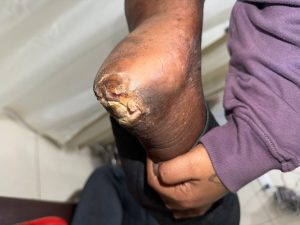
A diabetic foot wound that does not heal is not always just a wound problem. Very often, the real issue is poor blood flow to the foot because of blocked arteries.
In this case, a 70-year-old male patient with diabetes came with a non-healing infected wound over the heel. On evaluation, he had multiple-level blockages in the arteries of the leg. This was a classic presentation of Peripheral Artery Disease, also called PAD. After angioplasty to improve blood flow and dedicated wound care for 3 months, the wound healed completely and the patient was able to walk normally again.
This case is important because it shows why diabetic foot wounds need vascular evaluation at the right time.
What Was the Patient’s Problem?
The patient was a 70-year-old male with diabetes. He had an infected wound on the heel that was not healing.
In diabetic patients, wounds can fail to heal for many reasons. Infection, high sugar levels, pressure on the wound, nerve damage, and poor blood flow can all play a role. In this patient, the major hidden problem was reduced blood supply to the foot.
When we evaluated his leg circulation, we found multiple blockages in the arteries supplying the lower limb. The wound was not getting enough blood to heal.
This is a common mistake I see in diabetic foot cases. The wound is treated from the outside with dressing, but the blood flow problem inside is missed.
Why Does Poor Blood Flow Delay Wound Healing?
A wound needs oxygen-rich blood to heal.
Blood carries oxygen, nutrients, immune cells, and healing factors to the damaged tissue. When the arteries are narrowed or blocked, the wound does not receive enough blood. Even good dressing may not work if the wound has poor circulation.
This is why a diabetic foot wound should not be judged only by its surface appearance.
A small-looking wound can be serious if:
- the foot pulses are weak
- the foot feels cold
- the wound is painful or infected
- the skin is dark or blackened
- the wound is not reducing in size
- the wound remains open despite regular dressing
In diabetic foot ulcers, PAD is common and can increase the risk of poor healing, infection progression, and limb loss. IWGDF guidelines recommend vascular assessment in diabetic foot ulcers, especially when healing is delayed despite standard wound care.
What Is Peripheral Artery Disease in a Diabetic Foot?
Peripheral Artery Disease, or PAD, means the arteries carrying blood to the legs and feet have become narrowed or blocked.
In diabetes, this can be more dangerous because the patient may also have nerve damage. Because of reduced sensation, many patients do not feel pain early. By the time they notice the wound, infection or tissue damage may already be advanced.
PAD may show as:
- leg pain while walking
- foot pain at rest
- coldness in the foot
- weak or absent foot pulses
- non-healing ulcers
- blackening of toes or skin
- gangrene
- recurrent wound infection
For patients with diabetic foot wounds, I usually focus on one key question first:
Is there enough blood reaching the wound to allow healing?
For more details on this condition, patients can read about Peripheral Artery Disease treatment.
How Was This Case Evaluated?
The wound was examined clinically, but the main decision was not based only on the wound photograph.
The patient needed a vascular assessment to understand the blood supply to the leg and foot. In diabetic foot wounds, we usually check circulation using clinical examination and vascular tests.
Depending on the case, evaluation may include:
- foot pulse examination
- Doppler assessment
- ABI or toe pressure testing
- duplex ultrasound
- CT angiography
- peripheral angiography when intervention is planned
The goal is to map where the artery blockages are and whether blood flow can be restored.
Dr Sravan’s vascular lab page describes non-invasive vascular assessment for peripheral arterial disease, ulcers, gangrene, arterial blockages and blood flow issues. Patients can also refer to the Vascular Lab page for circulation evaluation.
Why Angioplasty Was Needed
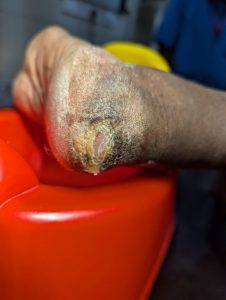
In this case, the patient had multiple-level artery blockages. The wound was not healing because the blood supply to the heel region was poor.
Angioplasty was done to open the blocked artery segments and improve blood flow to the foot.
Peripheral angioplasty is a minimally invasive vascular procedure. A catheter is passed into the blocked artery, and a balloon is used to open the narrowed segment. In selected cases, a stent or other technique may be used depending on the artery condition.
The objective is simple:
restore blood flow so the wound gets a chance to heal.
Angioplasty does not replace wound care. It creates the condition needed for healing. The wound still needs careful dressing, infection control, offloading, sugar control, and regular review.
Why Wound Care Continued After Angioplasty
This is the most important learning from this case.
Many people think that once angioplasty is done, the work is over. That is not correct.
After blood flow improves, the wound still needs disciplined care. In this patient, close follow-up and the correct type of dressing were continued until the wound healed fully.
The post-angioplasty wound care plan included:
- regular wound inspection
- appropriate dressing changes
- infection monitoring
- pressure reduction over the heel
- diabetes control
- tracking wound size and tissue quality
- follow-up until complete healing
This is why I always explain to patients and families:
Angioplasty improves blood flow. Wound care completes the healing journey.
Result After 3 Months
Three months after angioplasty and dedicated wound care, the heel wound healed completely.
The patient regained normal walking ability. Most importantly, the leg was saved from amputation.
This was possible because we treated the real cause behind the wound. The focus was not only on the infection or dressing. The focus was on restoring blood flow and then supporting the wound until healing was complete.
This is one patient’s clinical outcome. Healing time can vary depending on age, sugar control, infection severity, artery disease, kidney function, smoking history, nutrition, and how early treatment is started.
When Should a Diabetic Foot Wound Be Checked by a Vascular Surgeon?
A diabetic foot wound should be checked by a vascular surgeon when healing is delayed or when there are signs of poor circulation.
Do not wait if there is:
- a wound that is not healing after regular dressing
- black or dark skin around the wound
- pus, smell, or repeated infection
- coldness in the foot
- pain at rest
- pain while walking
- weak foot pulses
- wound over the heel or toes
- advice for amputation without vascular assessment
IWGDF guidelines specifically recommend considering vascular imaging when a diabetic foot ulcer is not healing within 4–6 weeks despite good care, and considering revascularisation when PAD is present.
Patients in Bangalore with a diabetic wound that is not healing can consult a vascular specialist in Bangalore for circulation evaluation.
Can Angioplasty Prevent Amputation in Every Diabetic Foot Case?
No. Angioplasty cannot guarantee limb salvage in every patient.
The outcome depends on many factors:
- how much tissue is already damaged
- whether infection has spread deeply
- whether blood flow can be restored
- kidney function
- diabetes control
- smoking status
- wound depth
- follow-up compliance
But in selected patients, especially when poor blood flow is the main reason for non-healing, angioplasty can make a major difference.
The earlier the circulation problem is identified, the better the chance of saving tissue and avoiding major complications.
Doctor’s Message From This Case
In my practice, I see many diabetic foot wounds where families are focused only on the wound dressing. Dressing is important, but it is only one part of treatment.
If the blood pipe supplying the foot is blocked, the wound will struggle to heal.
A diabetic foot wound needs three things:
- blood flow
- infection control
- correct wound care
Missing any one of these can delay healing.
This case is a reminder that a non-healing diabetic foot wound should not be ignored. Early vascular evaluation can help identify whether angioplasty, wound care, or another treatment pathway is needed.
For diabetic foot-related circulation problems, patients can read more on diabetic foot care.
Frequently Asked Questions
Why is my diabetic foot wound not healing?
A diabetic foot wound may not heal because of poor blood flow, infection, pressure on the wound, nerve damage, or uncontrolled sugar levels. In many patients, blocked arteries are the hidden reason healing is delayed.
Can angioplasty help a diabetic foot wound heal?
Yes, angioplasty may help when poor blood flow is preventing the wound from healing. It opens blocked arteries and improves circulation to the foot. Wound care must continue after angioplasty.
How do I know if my foot wound has poor blood flow?
Warning signs include cold foot, weak pulses, black skin, pain while walking, pain at rest, slow healing, and recurrent infection. A vascular test is needed to confirm blood flow status.
Is dressing enough for a diabetic foot wound?
Not always. Dressing helps the wound surface, but if the foot is not receiving enough blood, dressing alone may fail. Blood flow must be checked in non-healing wounds.
How long does healing take after angioplasty?
Healing time varies. In this case, the wound healed completely in 3 months. Some wounds may heal faster, while deeper or infected wounds may take longer.
When should I consult a vascular surgeon for diabetic foot?
Consult a vascular surgeon if a diabetic foot wound is not healing, has infection, becomes black, causes pain, or if amputation has been suggested without blood flow evaluation.
Can a diabetic foot wound lead to amputation?
Yes, if infection spreads, tissue dies, or blood flow is not restored in time. Early vascular assessment can help identify whether the limb can be saved.
Conclusion
This case shows a simple but powerful lesson.
A diabetic foot wound that does not heal may be a circulation problem, not just a dressing problem. In this 70-year-old patient, the heel wound healed after angioplasty restored blood flow and dedicated wound care supported the healing process.
If you or your family member has diabetes and a foot wound that is not healing, do not delay vascular evaluation. The earlier the cause is identified, the better the chance of protecting the foot and avoiding major complications.
For appointment support, patients can visit the Contact Dr Sravan page.
