
Diabetic wounds, especially on the feet, often take longer to heal due to poor blood circulation, nerve damage, and increased risk of infection. What may start as a small cut or blister can gradually worsen if not treated early. In many cases, patients do not realise the seriousness until the wound becomes painful, infected, or difficult to manage.
As a vascular and endovascular surgeon, I frequently see patients at advanced stages where early care could have prevented complications. This article explains why diabetic wounds heal slowly, where they usually occur, and what can be done to improve healing outcomes.
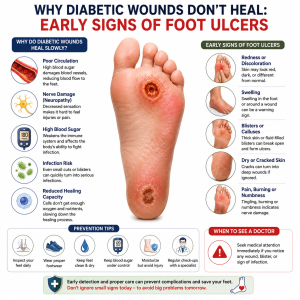
Why do diabetic wounds take so long to heal?
Delayed healing in diabetes is not due to a single factor. It is usually a combination of multiple physiological changes in the body.
- Reduced blood flow: Narrowed or damaged blood vessels limit oxygen supply to tissues
- Nerve damage (neuropathy): Patients may not feel pain, leading to unnoticed injuries
- High blood sugar levels: Slows down the body’s natural repair process
- Weakened immunity: Increased risk of infection
What happens inside the body when healing is delayed?
Elevated blood sugar affects the body at a cellular level.
- Slows the activity of white blood cells that fight infection
- Reduces collagen production needed for tissue repair
- Impairs new blood vessel formation
- Increases inflammation, delaying closure of wounds
This is why even small injuries can become chronic wounds if not managed properly.
Where are diabetic wounds most commonly found?
Diabetic wounds are most often seen in areas that experience pressure or friction.
- Bottom of the feet
- Toes and between toes
- Heel region
- Areas affected by footwear pressure
These locations are prone because repeated stress combined with reduced sensation increases risk of unnoticed injury.
Why are diabetic wounds more prone to infection?
Diabetic wounds create an environment where bacteria can grow easily.
- Poor circulation reduces immune response
- High glucose levels promote bacterial growth
- Delayed healing keeps the wound open longer
Infections can worsen quickly and may spread deeper into tissues if untreated.
Not all wounds in diabetes behave the same way, but infections are one of the most common reasons for delayed healing and complications.
Early signs of diabetic foot ulcers
Recognising early warning signs can prevent progression.
- Non-healing wound for more than a few days
- Swelling or redness around the wound
- Foul smell or discharge
- Darkening of skin around the area
- Pain in some cases, though many patients feel none
How can I help a diabetic wound heal faster?
Healing requires both medical care and patient involvement.
- Keep blood sugar levels under control
- Clean and dress the wound regularly
- Avoid pressure on the affected area
- Use proper footwear
- Follow medical advice consistently
Ignoring small wounds is one of the most common reasons for complications.
How can blood flow be improved to a diabetic wound?
Improving circulation is a key part of treatment.
- Regular but controlled movement
- Avoid prolonged sitting or pressure
- Medical management of vascular conditions
- In advanced cases, minimally invasive vascular procedures
As a vascular specialist, restoring blood flow is often a critical step in improving healing.
Advanced treatment options for diabetic wounds
Depending on severity, treatment may include:
- Wound debridement (removal of dead tissue)
- Infection control with antibiotics
- Pressure offloading techniques
- Vascular intervention to improve circulation
Early intervention often reduces the need for more complex procedures later.
When to consult your doctor
You should seek medical attention if:
- A wound does not heal within a few days
- There is redness, swelling, or discharge
- You notice a foul smell
- Skin around the wound becomes dark or discolored
- There is a history of diabetes with poor control
If you are consulting a vascular specialist in Bangalore or nearby areas, early evaluation can significantly improve outcomes and reduce the risk of complications.
Conclusion
Diabetic wounds do not heal easily because of underlying issues such as poor circulation, nerve damage, and increased infection risk. However, early recognition, proper care, and timely medical intervention can prevent serious complications. Paying attention to small changes and seeking advice early can make a significant difference in recovery.
FAQs
Why do diabetic wounds take so long to heal?
Diabetic wounds heal slowly due to reduced blood flow, nerve damage, high blood sugar levels, and a weakened immune response. These factors delay tissue repair and increase infection risk.
How can I help a diabetic wound heal faster?
Controlling blood sugar, keeping the wound clean, avoiding pressure, and following medical advice can improve healing. Early treatment is essential.
Where are diabetic wounds most commonly found?
They are usually found on the feet, toes, heels, and pressure areas where injuries often go unnoticed due to reduced sensation.
Why are diabetic wounds more prone to infection?
High blood sugar levels and poor circulation create an environment where bacteria can grow easily, increasing infection risk.
How can I improve blood flow to a diabetic wound?
Improving circulation may involve lifestyle changes, controlled movement, and in some cases, medical or vascular treatment to restore blood flow.
