
Central Venous Access Device (CVAD) Insertion in Bangalore
Chemo Port & PICC Line Insertion by Vascular Surgeon Dr. Sravan C.P.S
Central Venous Access Devices, or CVADs, are special tubes placed into large veins when a patient needs repeated or long-term treatment through the bloodstream. They are commonly used for chemotherapy, long-term antibiotics, nutrition support, blood transfusions, dialysis support, and frequent blood tests.
As a vascular and endovascular surgeon, I usually recommend CVAD planning when regular hand IV lines are no longer practical, safe, or comfortable. The goal is simple: reliable access, fewer needle pricks, safer medicine delivery, and proper device selection based on the patient’s treatment duration.
My Clinical View on CVAD Selection
A CVAD should not be chosen only because it is available. It should be chosen based on the patient’s treatment plan, vein condition, infection risk, expected duration of therapy, activity level, and future access needs.
For example, a patient receiving chemotherapy over several months may benefit from a chemo port. A patient needing IV antibiotics for a few weeks may need a PICC line. A patient with kidney disease or dialysis-related needs may require a different vascular access plan.
The right device reduces repeated needle pricks and supports treatment, but the wrong device can increase discomfort, blockage, infection, or clot risk.
When Regular IV Lines Are Not Enough
A normal IV line in the hand or arm may not be suitable when:
- Treatment is repeated often: Frequent needle pricks become painful and damage smaller veins.
- Medicines are strong or irritating: Some chemotherapy drugs or IV medications are safer through larger central veins.
- Treatment lasts weeks or months: Long-term access needs a more stable device.
- Blood tests are frequent: CVADs may reduce repeated needle sticks.
- Peripheral veins are poor: Some patients have small, fragile, or repeatedly damaged veins.
- Nutrition support is needed: TPN requires reliable central venous access.
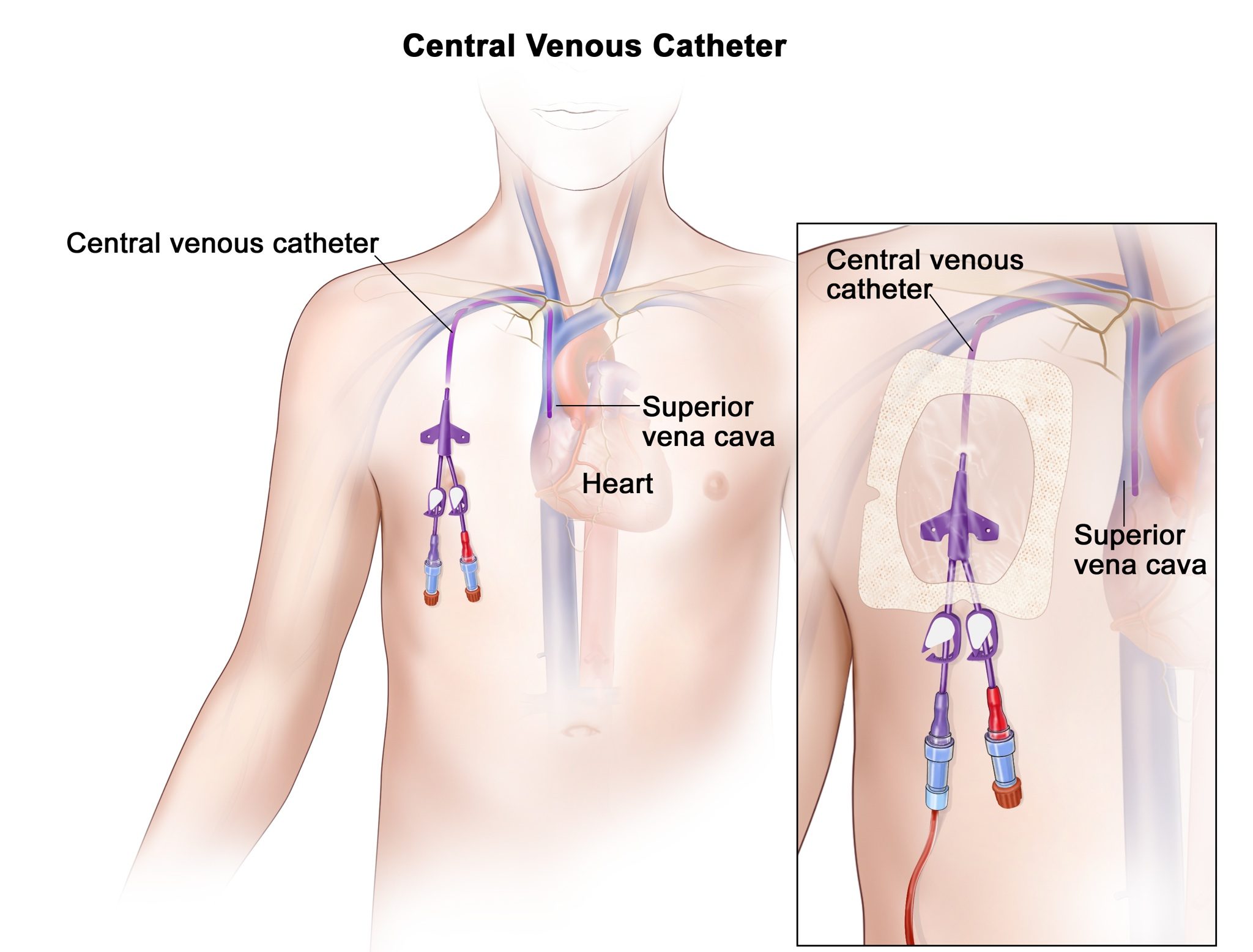
Why Central Venous Access Devices Are Used
CVADs are recommended when patients require repeated or long-term intravenous treatment.
Administration of Medications
Many treatments such as chemotherapy, antibiotics, and specialised IV medications require reliable venous access. CVADs allow these medicines to be delivered safely into large veins.
Long-Term IV Therapy
Patients who require IV treatment for several weeks or months benefit from CVAD placement because it reduces repeated needle insertions and improves treatment comfort.
Nutritional Support
Some patients cannot take adequate nutrition by mouth due to medical conditions. CVADs allow doctors to provide total parenteral nutrition (TPN) directly into the bloodstream.
Blood Transfusion
CVADs allow safe and efficient transfusion of blood products, especially in patients who require repeated transfusions.
Frequent Blood Sampling
Patients who need frequent blood tests can benefit from CVADs because blood samples can be taken directly from the device without repeated needle pricks.
Types of Central Venous Access Devices
Different types of CVADs are used depending on the patient’s treatment needs and expected duration of therapy.
Chemo Port (Implanted Port)
A chemo port is a small device placed beneath the skin, usually in the chest area. It connects to a catheter that enters a large vein. Because the port sits under the skin, it is not visible externally and allows patients to continue daily activities comfortably.
Advantages of Chemo Ports
• Suitable for long-term treatments such as chemotherapy
• Lower infection risk compared to external lines
• Minimal maintenance between treatment sessions
• Allows repeated access without damaging veins
Chemo ports are commonly used for cancer patients receiving chemotherapy.
PICC Line (Peripherally Inserted Central Catheter)
A PICC line is inserted through a vein in the arm and advanced into a large vein near the heart. This procedure is less invasive than some other central line placements and can be performed under ultrasound guidance.
Common Uses of PICC Lines
• Long-term antibiotic treatment
• Chemotherapy delivery
• Nutritional therapy
• Repeated blood sampling
PICC lines are often used for short to medium-term treatments lasting weeks to months.
How CVAD Placement Is Performed
CVAD insertion is performed in a sterile medical environment to reduce infection risk. The procedure generally includes:
-
Local anaesthesia to numb the insertion area
-
Ultrasound guidance to identify the vein
-
Placement of the catheter into a central vein
-
Securing the device and confirming position with imaging
Most patients can return home the same day depending on the type of device placed.
Risks and Complications of CVADs
Although CVAD placement is generally safe, some complications may occur.
Infection
Because the device connects directly to the bloodstream, maintaining proper hygiene and sterile care is important to prevent infections.
Catheter Blockage
Clots or deposits may block the catheter over time. Doctors may flush the line with medication to maintain flow.
Catheter Displacement
In rare cases the catheter may move from its original position. Imaging may be used to confirm placement.
Blood Clot Formation
Some patients may develop venous thrombosis near the catheter. Early detection allows prompt treatment. Regular monitoring helps prevent most complications.
Caring for Your Central Venous Access Device
Proper care helps ensure the device remains safe and functional.
Keep the Area Clean
The insertion site must be kept clean and dry to reduce infection risk.
Follow Dressing Instructions
Dressings around the catheter must be changed regularly according to medical instructions.
Avoid Excess Pressure
Patients should avoid heavy lifting or pressure around the device area.
Watch for Signs of Infection
Seek medical advice if you notice:
• redness around the insertion site
• swelling or pain
• fever or chills
• fluid leakage from the catheter
Early medical attention helps prevent serious complications.
Chemo Port vs PICC Line vs Central Line
| Device | Best Used For | Duration | Visibility | Maintenance |
|---|---|---|---|---|
| Chemo Port | Long-term chemotherapy or repeated IV treatment | Months to years | Under the skin | Lower day-to-day maintenance |
| PICC Line | Antibiotics, chemotherapy, nutrition, medium-term access | Weeks to months | External line on arm | Needs regular dressing and care |
| Temporary Central Line | ICU care, emergency access, short-term treatment | Days to weeks | External line | Higher monitoring need |
| Dialysis Access Catheter | Temporary dialysis support | Short-term / bridging | External catheter | Requires strict care |
Why Choose Dr. Sravan for CVAD Placement
Dr. Sravan C.P.S is a vascular and endovascular surgeon with experience in advanced vascular access procedures. He specialises in procedures involving central venous access, dialysis access surgery, and complex vascular interventions. Dr. Sravan has been recognised among the Best Doctors in South India by Outlook Magazine, reflecting his commitment to patient care and clinical expertise.
Expertise Includes
✔ Chemo port insertion
✔ PICC line placement
✔ Dialysis access procedures
✔ Management of vascular access complications
✔ Ultrasound-guided vascular interventions
Patients receive personalised evaluation to determine the most appropriate access device for their treatment needs.
Conclusion
Central Venous Access Devices provide reliable and safe vascular access for patients who require long-term intravenous treatments. Devices such as chemo ports and PICC lines improve treatment efficiency while reducing repeated needle pricks. Selecting the appropriate device depends on the patient’s medical condition, duration of treatment, and overall health. With proper insertion and care, CVADs can significantly improve treatment comfort and outcomes. Consulting an experienced vascular specialist helps ensure that the most suitable central venous access device is chosen for each patient’s needs.
Consult Dr. Sravan for CVAD, Chemo Port or PICC Line Placement
If you or a family member needs chemotherapy, long-term IV antibiotics, nutrition support, dialysis-related access, or repeated blood tests, proper vascular access planning can reduce repeated needle pricks and improve treatment comfort. Dr. Sravan C.P.S evaluates the treatment requirement, vein condition, expected duration of therapy, and patient safety factors before recommending a chemo port, PICC line, central line, or other vascular access option.
Book an Appointment with Dr. Sravan
What is a central venous access device?
A central venous access device is a medical catheter placed in a large vein to deliver medications, fluids, nutrition, or blood transfusions.
How long can a chemo port remain in the body?
Chemo ports can remain in place for several months or even years, depending on the patient’s treatment plan.
Is PICC line insertion painful?
The procedure is usually performed under local anaesthesia, so most patients experience minimal discomfort during insertion.
Can patients live normally with a chemo port?
Yes. Because the port is placed under the skin, most patients can continue their daily activities with minimal restrictions.
What are the signs of CVAD infection?
Signs include redness, swelling, pain at the insertion site, fever, or discharge from the catheter.
When should a CVAD be removed?
The device is removed once treatment is completed or if complications such as infection occur.
