
Most people don’t think about blood clots until something serious happens. A sudden stroke, a heart issue, or unexplained leg swelling – these situations often bring attention to a problem that had been silently developing.
For patients with conditions like diabetes, high blood pressure, heart problems, or a sedentary lifestyle, the risk of blood clots is higher than expected. In such cases, doctors don’t just treat problems – they try to prevent them early.
This is where medicines for blood clot prevention come in.
These are commonly called blood thinners, but in reality, they don’t make your blood “thin.” They simply reduce the chances of unwanted clot formation inside blood vessels. This helps keep blood flowing smoothly and reduces the risk of serious complications.
Understanding these medicines in simple terms can help you make better decisions about your health.
Why Blood Clots Can Be Dangerous
Blood clotting is a normal process. If you cut your finger, a clot forms to stop bleeding. That is healthy.
The concern begins when clots form inside blood vessels without any injury.
Imagine a pipe carrying water. If something blocks it, the flow stops. The same happens in the body.
When a clot blocks blood flow:
- In the heart → it can lead to a heart attack
- In the brain → it can cause a stroke
- In the leg veins → it can cause deep vein thrombosis (DVT)
- If it travels to lungs → it becomes a serious emergency
What makes it more concerning is that many clots develop slowly and silently before showing symptoms.
Who Usually Needs Blood Clot Prevention Medicines
Not everyone needs these medicines. They are usually advised only when the risk is higher than normal.
You may fall into a high-risk category if you have multiple health conditions together.
Common high-risk situations
| Condition | Why risk increases |
|---|---|
| Diabetes | Damages blood vessels and circulation |
| High BP | Causes stress on arteries |
| Heart disease | Affects blood flow patterns |
| Atrial fibrillation | Irregular heartbeat increases clot risk |
| Recent surgery | Reduced movement increases clot chances |
| Long sitting hours | Blood flow becomes sluggish |
| Smoking | Damages blood vessels |
| Previous clot history | Higher chance of recurrence |
In India, a combination of diabetes, low physical activity, and delayed health check-ups makes this risk even more common.
How These Medicines Actually Work
To understand medicines, think of blood clotting as a process with multiple steps.
Some medicines act early in the process. Others act later.
- Some stop platelets from sticking together
- Some slow down clot formation
- Some prevent existing clots from growing
The goal is simple – keep blood flowing without unwanted blockage.
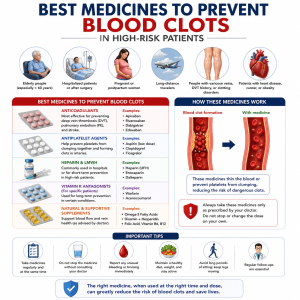
Common Medicines Used in India to Prevent Blood Clots
Let’s break this down in a simple, practical way.
1. Antiplatelet Medicines (Most Commonly Prescribed)
These are usually the first line of prevention, especially for heart and vascular patients.
| Medicine Name | Common Brand (India) | How it helps |
|---|---|---|
| Aspirin | Ecosprin | Prevents platelets from clumping |
| Clopidogrel | Clopitab / Plavix | Reduces clot formation risk |
| Ticagrelor | Brilinta | Stronger platelet control |
These medicines are commonly given to:
- Patients with heart disease
- Those who had a stent placed
- Patients with blocked arteries in legs
They are usually taken once daily and continued long-term.
2. Anticoagulants (Stronger Blood Thinners)
These are used when the risk of clot formation is higher.
| Medicine Name | Common Use |
|---|---|
| Warfarin | Older medicine, requires monitoring |
| Apixaban (Eliquis) | Used in heart rhythm issues |
| Rivaroxaban (Xarelto) | Used in DVT and clot prevention |
| Dabigatran (Pradaxa) | Alternative to warfarin |
These medicines act deeper in the clotting process.
They are commonly used in:
- Atrial fibrillation
- Deep vein thrombosis
- After certain surgeries
- Patients with repeated clot risk
They require careful supervision and regular follow-up.
3. Injectable Medicines (Short-Term Use)
These are usually given in hospitals.
| Medicine | When used |
|---|---|
| Enoxaparin (heparin) | After surgery or during hospital stay |
These act quickly and are used for immediate protection.
Which Medicine Is Right for You
This is where many patients get confused.
There is no single “best medicine” for everyone.
The choice depends on:
- Your condition
- Your risk level
- Your age
- Other medicines you are taking
- Your bleeding risk
For example:
- A heart patient may need aspirin + clopidogrel
- A patient with irregular heartbeat may need apixaban
- A surgery patient may need injections initially
This decision should always be taken by a doctor.
Side Effects You Should Be Aware Of
Because these medicines reduce clotting, the main concern is bleeding.
You don’t need to be afraid, but you should stay aware.
Common signs to watch
| Symptom | What it may indicate |
|---|---|
| Easy bruising | Blood thinning effect |
| Bleeding gums | Increased sensitivity |
| Blood in urine or stool | Needs medical attention |
| Long bleeding after cuts | Reduced clotting ability |
These medicines are safe when taken properly, but ignoring symptoms can lead to complications.
Common Mistakes People Make
This is something seen very frequently in Indian patients.
Many people start medicines but don’t continue them properly.
1. Stopping Medicines Once They Feel Better
Clot prevention medicines are not for short-term relief.
Stopping suddenly can increase risk again.
2. Taking Painkillers Along with Blood Thinners
Tablets like Combiflam, Voveran, Zerodol can increase bleeding risk if taken regularly with blood thinners.
3. Skipping Follow-Ups
Some medicines like warfarin require regular blood tests.
Skipping this can make treatment unsafe.
Lifestyle Still Plays a Big Role
Medicines alone are not enough.
Simple daily habits make a big difference:
- Walking regularly
- Avoiding long hours of sitting
- Drinking enough water
- Controlling sugar and BP
- Quitting smoking
These steps support the effect of medicines and improve circulation.
Early Signs of Blood Clot You Should Not Ignore
Even if you are on medication, symptoms matter.
Watch for:
- Swelling in one leg
- Pain or tightness in calf
- Warmth in the affected area
- Sudden breathlessness
These signs need immediate attention.
When Should You Consult a Specialist
You should not wait too long if:
- You have multiple risk factors
- You already had a clot before
- You are on long-term medication
- You notice new symptoms
If you are consulting a vascular specialist in Bangalore, especially around Sarjapur, Whitefield or Electronic City, early assessment can help prevent complications.
Can Blood Clots Be Completely Prevented
Not always.
But the risk can be reduced significantly with the right approach.
Think of it as risk control, not complete elimination.
The combination of:
- Medicines
- Monitoring
- Lifestyle changes
gives the best protection.
Frequently Asked Questions
Which is the best medicine to prevent blood clots?
There is no single best option. Medicines are chosen based on your health condition and risk level.
Is aspirin enough for clot prevention?
For some patients, yes. Others may need stronger medicines.
Can I stop blood thinners once I feel fine?
No, stopping suddenly can increase risk of clot formation.
Are blood thinners safe for long-term use?
Yes, when taken under proper medical guidance.
Do these medicines dissolve clots?
They mainly prevent new clots and stop existing ones from growing.
Conclusion
Blood clot prevention is not something to ignore, especially if you fall into a high-risk category.
The right medicines, taken at the right time, can prevent serious complications like stroke, heart attack, or deep vein thrombosis.
At the same time, understanding your body, noticing early signs, and maintaining a healthy routine plays an equally important role.
Taking action early is always easier than dealing with complications later.
