
If you have diabetes, protecting your legs and feet should be part of your daily routine. High blood sugar over time can damage nerves and blood vessels, reducing sensation and blood flow. This makes even small injuries risky, as they may go unnoticed and heal slowly. The good news is that simple daily habits can significantly reduce the risk of infections, ulcers, and serious complications.
In my clinical practice, many patients develop preventable foot problems because early care was missed. A small crack in the skin, an unnoticed blister, or improper footwear can gradually lead to infection. What makes diabetic foot problems dangerous is not just the wound, but the delay in recognising it. Daily attention is the most effective protection.
Why are legs at risk in diabetes?
Diabetes affects both nerves and blood vessels, especially in the lower limbs.
Key problems include:
- Neuropathy: Reduced sensation, so injuries are not felt
- Poor blood flow: Delayed healing and higher infection risk
- Reduced immunity: Infections spread more easily
Over time, this can lead to:
- Non-healing ulcers
- Recurrent infections
- Gangrene in severe cases
What are the most important daily habits?
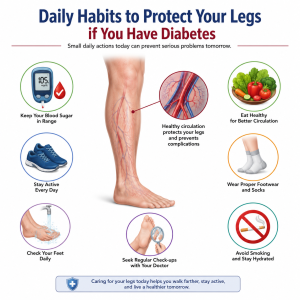
Protecting your legs is not about one action. It is about consistent daily care.
1. Inspect your feet every day
This is the most important habit.
Check for:
- Cuts or cracks
- Blisters
- Redness or swelling
- Nail problems
- Discolouration
Use a mirror if needed to see the sole.
In practice, many serious infections begin as small unnoticed injuries.
2. Wash and dry your feet properly
Cleanliness prevents infection.
- Wash feet daily with lukewarm water
- Avoid very hot water
- Dry gently, especially between toes
- Do not leave moisture trapped
Moist areas increase the risk of fungal infection.
3. Moisturise but avoid between toes
Dry skin can crack and become a point of entry for infection.
- Apply moisturiser to prevent dryness
- Avoid applying between toes to prevent fungal growth
4. Wear proper footwear at all times
Walking barefoot is a common cause of injury.
- Use soft, well-fitted footwear
- Avoid tight or loose shoes
- Check inside shoes before wearing
- Avoid footwear that causes friction
In Indian settings, barefoot walking at home is a major risk factor.
5. Trim nails carefully
Improper nail cutting can lead to wounds.
- Cut nails straight across
- Avoid cutting too deep
- Do not remove corners aggressively
If vision is poor, seek assistance.
6. Control blood sugar strictly
This is the foundation of prevention.
High sugar levels:
- Delay healing
- Increase infection risk
- Worsen nerve damage
Patients with well-controlled diabetes have significantly fewer complications.
7. Avoid self-treatment of foot problems
Many patients use home remedies or over-the-counter treatments.
Avoid:
- Applying chemicals to corns
- Using blades to remove skin
- Ignoring wounds
Early medical care prevents complications.
8. Stay physically active
Movement improves blood circulation.
- Daily walking improves blood flow
- Avoid prolonged sitting
- Move your legs regularly
Better circulation supports healing and tissue health.
9. Stop smoking completely
Smoking reduces blood flow and worsens vascular damage.
- Narrows blood vessels
- Reduces oxygen delivery
- Delays healing
In practice, smokers with diabetes have a much higher risk of complications.
10. Check footwear and pressure points
Repeated pressure can cause ulcers.
- Look for areas of friction
- Change footwear if discomfort occurs
- Use cushioned soles if needed
Early pressure changes can prevent ulcers.
11. Manage associated conditions
Diabetes rarely acts alone.
Control:
- Blood pressure
- Cholesterol
- Weight
These factors affect blood vessels and overall risk.
What are early warning signs to watch for?
Do not ignore:
- Persistent redness
- Swelling
- Pain or unusual discomfort
- Numbness
- Wound not healing
- Colour change in skin
These signs need early evaluation.
What mistakes do patients commonly make?
From clinical experience, common mistakes include:
- Ignoring small wounds
- Walking barefoot
- Delaying doctor consultation
- Stopping treatment early
- Poor sugar control
Most serious complications are preventable.
Can these habits really prevent complications?
Yes.
Patients who follow daily foot care:
- Have fewer infections
- Heal faster
- Avoid hospital admissions
- Reduce risk of amputation
Prevention is always easier than treatment.
When should you seek medical attention?
Seek help immediately if you notice:
- Any wound or ulcer
- Pus discharge
- Black or discoloured skin
- Increasing swelling
- Fever with foot infection
If you are in Bangalore and have diabetes, especially in areas around South Bangalore or nearby regions, early evaluation of foot problems can prevent progression.
When to consult your doctor
Regular check-ups are important.
Consult if you have:
- Long-standing diabetes
- Reduced sensation in feet
- Previous foot ulcers
- Poorly controlled sugar
- Recurrent infections
Frequently asked questions
1. How often should I check my feet if I have diabetes?
Daily inspection is recommended to detect early problems.
2. Is it safe to walk barefoot at home?
No. Even small injuries can go unnoticed and lead to infection.
3. Can good sugar control prevent foot problems?
It significantly reduces risk but does not eliminate it completely.
4. What type of footwear is best?
Soft, well-fitting footwear that does not cause pressure or friction.
5. Can minor wounds heal on their own?
They may, but in diabetes, even small wounds should be monitored carefully.
6. Why do diabetic patients lose sensation in feet?
Due to nerve damage caused by prolonged high blood sugar.
7. When should I see a doctor for a foot problem?
If a wound does not improve, shows infection signs, or worsens.
Conclusion
Daily habits play a critical role in protecting the legs and feet in patients with diabetes. Simple steps like regular inspection, proper footwear, hygiene, and blood sugar control can prevent serious complications.
From a clinical perspective, most severe diabetic foot problems are preventable. The key is awareness, consistency, and early action. Patients who take daily care seriously have significantly better outcomes and avoid long-term complications.
