
You have leg pain. You take a tablet like Dolo 650, Combiflam, or Voveran, and within some time, the pain reduces. You feel better and continue your day.
This is very common.
But here’s the important question – is the pain actually gone, or just suppressed for some time?
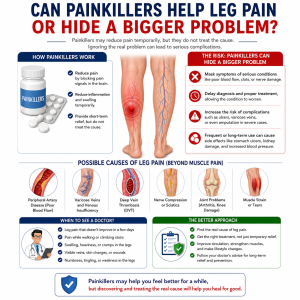
In many cases, painkillers do help. But when the pain keeps coming back, especially during walking, they might be hiding a deeper issue like poor blood circulation in the legs.
Let’s break this down in a simple way.
When Taking a Painkiller Is Completely Fine
If your pain started after:
- Standing for long hours
- Travelling a lot
- Physical work or exercise
- Muscle pull or fatigue
then taking a tablet like Dolo 650 (paracetamol) or Combiflam (ibuprofen + paracetamol) can give relief.
In these situations, pain is usually temporary. It settles in a day or two and doesn’t follow a pattern.
When You Should Start Paying Attention
Now think about this pattern:
You walk for some distance…
You start feeling pain or tightness in your calf…
You stop… the pain reduces…
You walk again… it comes back.
This is not typical muscle pain.
Many people ignore this because a tablet like Voveran (diclofenac) or Zerodol gives temporary relief. But the actual issue may still be there.
What Could Be the Real Problem?
Sometimes, leg pain like this happens because blood is not reaching the muscles properly.
When you walk, your muscles need more oxygen. If blood flow is reduced due to narrowing of arteries, pain starts.
This condition is related to circulation, not muscles.
You may also notice:
- Cramping in the calf while walking
- Feet feeling colder than usual
- Mild numbness or tingling
- Skin looking slightly darker or pale
- Small wounds taking longer to heal
These are early warning signs that most people miss.
Why Painkillers Can Be Misleading
Painkillers work on pain signals. They don’t improve blood flow.
So what happens?
- Pain reduces → you feel normal
- You continue routine
- Underlying issue slowly progresses
This delay is what causes bigger problems later.
Relief does not always mean recovery.
Simple Difference You Can Notice at Home
This one thing helps a lot:
- If pain comes randomly and improves with rest → usually muscle-related
- If pain comes specifically during walking and goes away when you stop → needs medical attention
This small observation is very important.
People Who Should Not Ignore This at All
Be extra careful if you have:
- Diabetes
- High BP
- Smoking habit (current or past)
- Age above 40
- Sitting job with low activity
In these cases, leg pain can be linked to blood circulation.
When Should You See a Doctor
You don’t have to rush for every small pain. But don’t ignore if:
- Pain is happening again and again
- Your walking distance is reducing
- You feel tightness or heaviness in legs
- There is numbness or unusual sensation
- Pain is affecting daily routine
If you are consulting a vascular specialist in Bangalore, early check can help identify whether it is just muscle pain or something related to blood flow.
Can You Still Take Painkillers?
Yes, you can.
But use them for short-term relief, not as a habit.
If you are taking tablets like Dolo, Combiflam, Zerodol, or Voveran frequently, it’s better to understand why the pain is coming back instead of only managing it.
Frequently Asked Questions
Can I take Dolo 650 daily for leg pain?
Not recommended for regular use without knowing the cause. Occasional use is fine, but repeated pain needs evaluation.
Is leg pain while walking normal?
No, if it happens regularly in a pattern, it should be checked.
Which tablet is best for leg pain?
Tablets like paracetamol or ibuprofen help temporarily, but the right treatment depends on the cause.
Can diabetes cause leg pain while walking?
Yes, diabetes can affect both nerves and blood vessels, leading to this type of pain.
How do I know if it is a circulation problem?
Pain that starts while walking and reduces with rest is a common sign.
Conclusion
Leg pain is something most people ignore, especially when a tablet gives quick relief.
But your body often gives early signals before a bigger problem develops.
Taking a painkiller once in a while is fine. But if the pain keeps coming back in a pattern, it’s worth paying attention.
Understanding the cause early can prevent complications and help you stay active without discomfort.
