Many people notice bulging veins in their legs after years of work that involves long hours of standing or sitting. A common question patients ask is whether these habits actually cause varicose veins or simply make an existing problem worse.
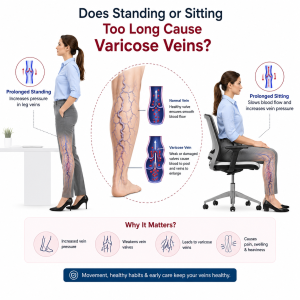
The short answer is that prolonged standing or sitting does not directly create varicose veins, but it can significantly increase the risk of developing them or worsen existing vein problems. When the legs remain in one position for extended periods, blood circulation slows and pressure builds inside the veins, particularly in the lower limbs.
Over time, this increased pressure can weaken vein walls and valves, allowing blood to pool in the veins. This pooling leads to the characteristic twisted, enlarged veins known as varicose veins.
Understanding Varicose Veins
Varicose veins are enlarged, swollen veins that usually appear in the legs and feet. They occur when the one-way valves inside the veins stop working efficiently, allowing blood to flow backward and accumulate.
Healthy veins move blood from the legs back toward the heart with the help of these valves and the pumping action of surrounding muscles. When the valves weaken, blood collects inside the veins, increasing pressure and causing them to stretch.
Common characteristics of varicose veins include:
• Bulging, twisted veins visible under the skin
• Dark purple or blue coloration
• Aching or heaviness in the legs
• Swelling around the ankles
• Burning or throbbing sensations
• Leg cramps at night
Although some people consider varicose veins only a cosmetic concern, they may indicate underlying chronic venous insufficiency, a condition where blood circulation in the veins becomes impaired.
Why Standing Too Long Can Increase the Risk
Certain occupations require individuals to stand for long hours without movement. Examples include:
• Teachers
• Surgeons and healthcare professionals
• Retail workers
• Factory workers
• Hairdressers
• Security personnel
When a person stands for extended periods, gravity causes blood to accumulate in the veins of the legs. Normally, leg muscles contract during walking, helping push blood upward toward the heart.
However, standing still reduces this pumping action, leading to increased venous pressure.
Over time, this pressure can:
• Stretch vein walls
• Damage vein valves
• Reduce circulation efficiency
• Increase swelling in the legs
This is why people who stand for long hours often develop symptoms like leg heaviness, swelling, or visible veins.
Why Sitting Too Long Can Also Be a Problem
Many people assume varicose veins only affect those who stand all day. In reality, prolonged sitting can also contribute to vein problems.
Office workers, drivers, and professionals who spend long hours at a desk may remain seated for extended periods with minimal leg movement.
When sitting for long durations:
• Blood flow slows in the legs
• Muscle pumping is reduced
• Pressure inside veins increases
• Circulation becomes sluggish
Over time, these factors may contribute to vein enlargement and valve damage.
This is why modern sedentary lifestyles are also associated with increasing cases of venous disorders.
Other Factors That Increase the Risk of Varicose Veins
Standing or sitting for long hours is only one part of the picture. Several other factors influence whether someone develops varicose veins.
Genetics
Family history plays a major role. If parents or close relatives have varicose veins, the risk increases significantly.
Age
As people age, veins naturally lose elasticity, making them more prone to stretching.
Pregnancy
Hormonal changes and increased blood volume during pregnancy can place extra pressure on veins.
Obesity
Excess body weight increases pressure on leg veins and affects circulation.
Hormonal Changes
Hormones associated with puberty, pregnancy, menopause, or hormonal therapy may weaken vein walls.
Lack of Physical Activity
Muscle movement is essential for healthy circulation. Sedentary lifestyles slow venous blood flow.
Early Symptoms People Often Ignore
Many patients ignore the early warning signs of vein problems until symptoms worsen.
Early symptoms may include:
• Leg fatigue at the end of the day
• Mild swelling in the ankles
• Itching around veins
• Heaviness in the legs after standing
• Small visible spider veins
Ignoring these symptoms may lead to progression of the disease.
Possible Complications of Untreated Varicose Veins
If left untreated, varicose veins may lead to complications such as:
Chronic Leg Swelling
Persistent fluid accumulation can cause discomfort and skin changes.
Skin Discoloration
The skin around affected veins may turn brown or dark due to blood leakage.
Venous Ulcers
Long-standing vein disease can lead to non-healing wounds, particularly near the ankle.
Blood Clots
Inflammation of veins may cause superficial thrombophlebitis or deeper clots.
Early evaluation helps prevent these complications.
How to Reduce the Risk
People whose work requires long hours of standing or sitting can reduce the risk of varicose veins through simple preventive measures.
Stay Physically Active
Regular walking improves blood circulation in the legs.
Avoid Staying in One Position
If your job requires standing or sitting, try to move every 30–40 minutes.
Elevate Your Legs
Raising the legs above heart level for a few minutes helps improve venous return.
Maintain Healthy Weight
Reducing excess body weight decreases pressure on leg veins.
Wear Compression Stockings
Medical compression stockings support veins and improve blood flow.
Strengthen Leg Muscles
Exercises such as calf raises, cycling, and swimming help maintain healthy circulation.
Modern Treatment Options for Varicose Veins
Medical advances have made varicose vein treatment significantly easier and less invasive than traditional surgery. Today, many procedures are performed as day-care treatments with quick recovery. Common treatments include:
Endovenous Laser Treatment (EVLT)
A minimally invasive laser procedure used to close diseased veins.
Radiofrequency Ablation
Uses heat energy to seal the affected vein.
Sclerotherapy
A medical solution is injected into small veins to collapse them.
Venaseal Procedure
A medical adhesive is used to close damaged veins.
Microphlebectomy
Small incisions are used to remove bulging veins.
The choice of treatment depends on the severity of the disease and the patient’s overall health.
Expert Insight
Patients experiencing leg swelling, visible veins, or persistent heaviness in the legs should consult a vascular specialist for proper evaluation.
Dr. Sravan C.P.S
Vascular & Endovascular Surgeon
Qualifications:
• MBBS
• MS (General Surgery)
• MRCS – Royal College of Edinburgh (UK)
• DNB – Peripheral Vascular Surgery
• FEVS – Fellowship in Vascular & Endovascular Surgery (National University Hospital, Singapore)
Dr. Sravan specializes in diagnosing and treating vascular conditions including:
• Varicose veins
• Deep vein thrombosis (DVT)
• Diabetic foot complications
• Peripheral arterial disease
• Dialysis access procedures
He practices vascular and endovascular procedures using both open surgical techniques and minimally invasive catheter-based treatments.
His clinics in Basavanagudi serve patients from across Bangalore, including Jayanagar, Banashankari, and JP Nagar.
When to Consult a Vascular Specialist
Consult a doctor if you experience:
• Persistent leg swelling
• Bulging or painful veins
• Skin discoloration near the ankles
• Non-healing wounds on the legs
• Sudden leg pain or redness
Early diagnosis can prevent complications and allow simpler treatment options.
FAQs
Can sitting too long cause varicose veins?
Sitting for long periods does not directly cause varicose veins but can slow blood circulation in the legs, increasing pressure inside veins and worsening existing vein problems.
Is standing all day harmful for veins?
Yes. Standing without movement for long hours increases pressure in leg veins and can contribute to vein valve damage over time.
Are varicose veins dangerous?
Varicose veins are often harmless initially but may lead to complications such as swelling, skin changes, ulcers, or blood clots if untreated.
Can exercise prevent varicose veins?
Regular physical activity helps improve circulation and may reduce the risk of developing varicose veins.
Do varicose veins always need surgery?
No. Many cases can be managed with lifestyle changes, compression therapy, or minimally invasive procedures.
Conclusion
Standing or sitting for long periods does not directly create varicose veins, but it can increase pressure in leg veins and accelerate vein damage over time. People whose jobs involve prolonged standing or desk work should pay attention to early symptoms and take preventive steps to maintain healthy circulation. Timely consultation with a vascular specialist allows early diagnosis and access to modern treatments that can relieve symptoms and prevent complications.